

Adaptive Learning: Definition, Benefits, Examples, and How It Improves Employee Training
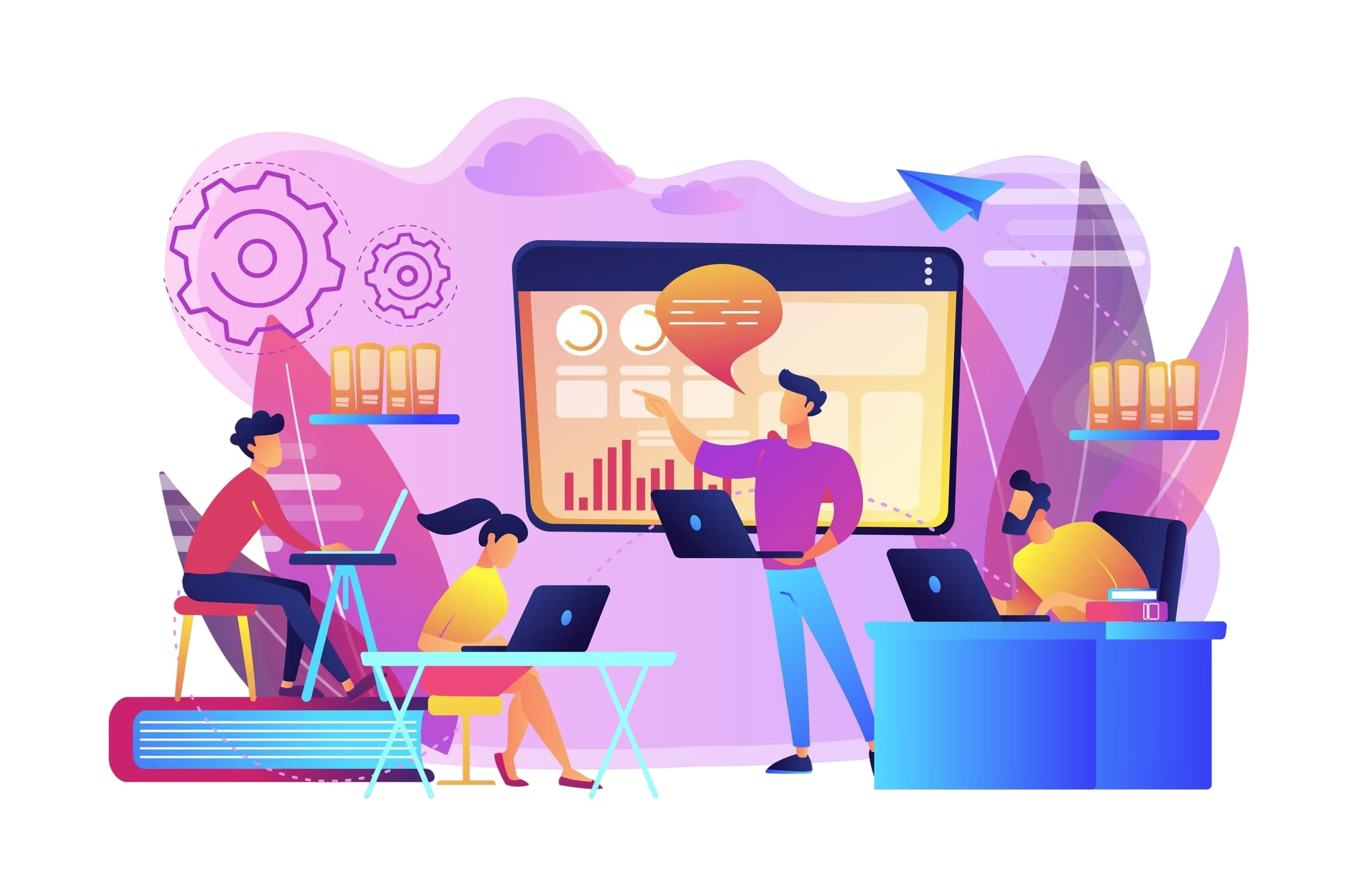
Adaptive Learning is an artificial intelligence (AI)-powered learning approach that personalizes training for every learner based on their knowledge, performance, learning behavior, preferences, and progress.
Instead of delivering the same course to everyone, adaptive learning continuously analyzes learner interactions and automatically adjusts the learning path to match individual needs.
In corporate Learning and Development (L&D), adaptive learning helps employees spend less time on topics they already understand while providing additional practice and guidance in areas where they need improvement. The result is a more efficient, engaging, and outcome-focused learning experience.
For example, imagine two sales executives enrolled in a negotiation training program. One employee demonstrates strong negotiation skills during the initial assessment, while another struggles with objection handling.
An adaptive learning platform may allow the first learner to skip introductory modules and move directly to advanced deal-closing strategies. Meanwhile, the second learner receives additional practice exercises, simulations, coaching videos, and assessments until they build the required competency.
This personalized approach ensures that every employee receives training that is relevant to their current skill level rather than following a fixed curriculum.
How Does Adaptive Learning Work?
Adaptive learning platforms use a combination of data analytics, artificial intelligence, and learning algorithms to create personalized learning experiences.
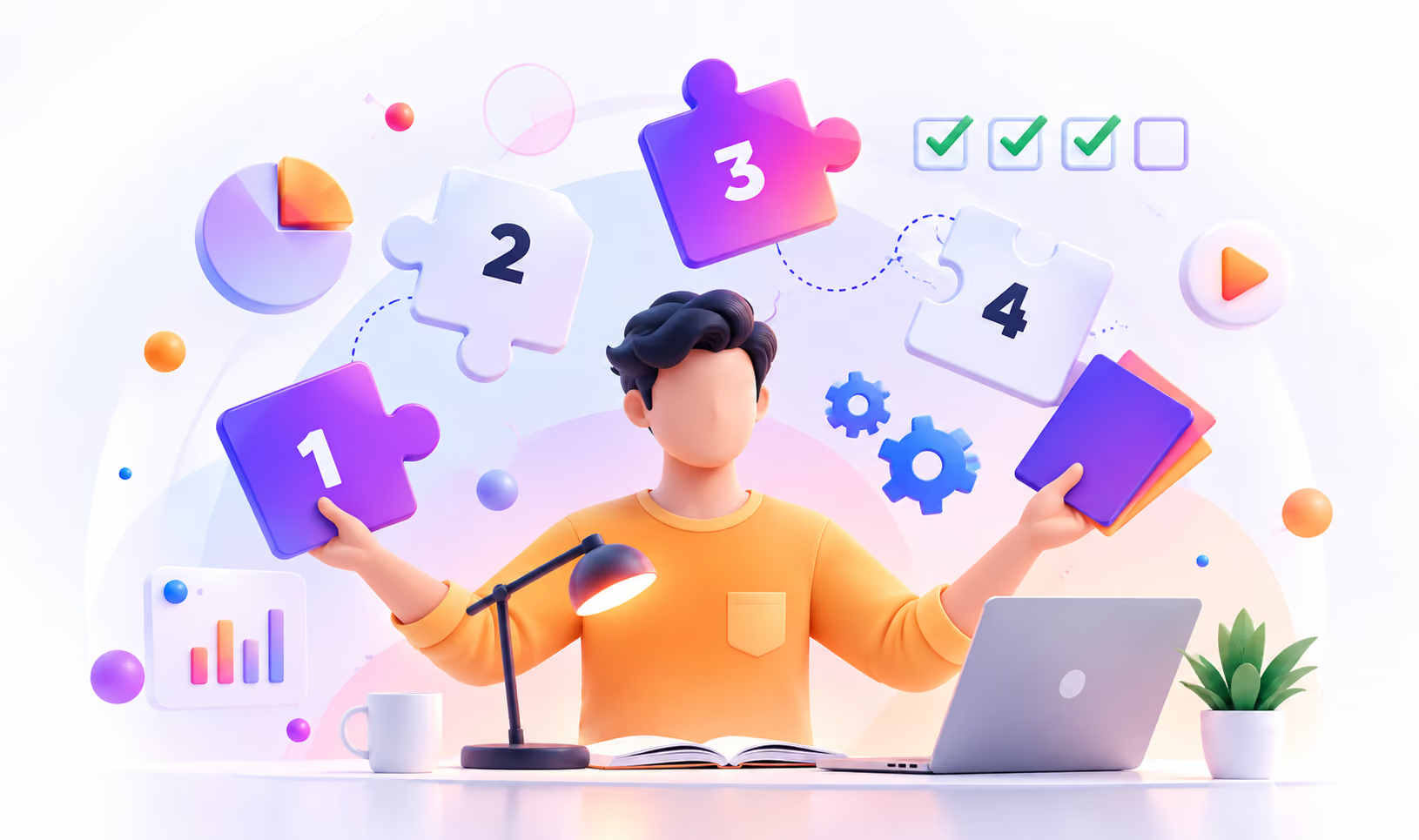
The process typically follows these steps:
- Assess the learner's current knowledge through quizzes, diagnostic tests, or previous learning records.
- Analyze learner behavior, including completion rates, quiz performance, learning speed, and engagement.
- Identify knowledge gaps by comparing current capabilities with required competencies.
- Recommend personalized content, such as courses, videos, simulations, assessments, or microlearning modules.
- Continuously adjust the learning journey based on ongoing performance and feedback.
Modern Learning Experience Platforms (LXPs) and AI-enabled Learning Management Systems (LMSs) automate this process, making personalization scalable across thousands of employees.
Why Is Adaptive Learning Important for Corporate Learning?
Traditional training often follows a one-size-fits-all model, where every employee receives the same content regardless of their existing knowledge or job responsibilities. This frequently results in wasted training time, lower engagement, and inconsistent learning outcomes.
Adaptive learning addresses these challenges by offering:
- Personalized learning journeys
- Faster skill development
- Reduced training time
- Higher learner engagement
- Better knowledge retention
- Improved assessment scores
- More efficient use of L&D resources
For organizations investing in workforce upskilling, adaptive learning helps ensure that training aligns with individual capabilities and business objectives.
What Are the Benefits of Adaptive Learning?
Organizations adopting adaptive learning often experience improvements across multiple areas of employee development.
1. Faster Learning
Employees focus only on the content they need, reducing unnecessary repetition and accelerating skill acquisition.
2. Higher Engagement
Relevant learning experiences keep learners motivated because the content matches their proficiency level and career goals.
3. Better Knowledge Retention
Learners revisit challenging topics while progressing quickly through familiar concepts, improving long-term retention.
4. Personalized Career Development
Adaptive learning supports role-specific development plans and helps employees build skills needed for future career opportunities.
5. Data-Driven Learning Decisions
L&D teams gain insights into learner progress, common skill gaps, and training effectiveness, enabling continuous optimization.
6. Where Is Adaptive Learning Used?
Adaptive learning is widely used across corporate training initiatives, including:
- Employee onboarding
- Leadership development
- Sales enablement
- Technical skills training
- Compliance training
- Customer service training
- Software and product training
- Digital transformation initiatives
It is particularly valuable in organizations with diverse workforces, multiple job roles, or global teams where employees have varying experience levels.
How Does Adaptive Learning Support Business Outcomes?
Adaptive learning connects employee development with organizational performance. By helping employees acquire the right skills more efficiently, organizations can:
- Reduce training costs
- Increase productivity
- Improve employee performance
- Accelerate onboarding
- Support internal mobility
- Build future-ready workforces
- Improve learning return on investment (ROI)
Many modern AI-powered learning platforms also combine adaptive learning with skills intelligence, competency frameworks, personalized recommendations, and career pathing to create a continuous learning ecosystem rather than isolated training programs.
Frequently Asked Questions
Is adaptive learning only used with AI?
While basic adaptive systems can use predefined rules, today's enterprise adaptive learning solutions primarily rely on Artificial Intelligence (AI) and machine learning to deliver highly personalized learning experiences.
Can adaptive learning work for compliance training?
Yes. Compliance training can remain mandatory while adaptive learning personalizes revision content, practice assessments, and remediation based on learner performance.
Is adaptive learning suitable for large organizations?
Yes. Adaptive learning platforms are designed to scale across thousands of learners, making them ideal for enterprises with diverse roles, locations, and learning needs.
Does adaptive learning replace instructors?
No. Adaptive learning complements instructors by automating personalization and allowing facilitators to focus on coaching, mentoring, and higher-value learning interventions.
Key Takeaway
Adaptive learning is transforming corporate Learning and Development by replacing standardized training with intelligent, personalized learning experiences. Using AI to understand each learner's strengths, weaknesses, and goals, organizations can deliver more relevant training, accelerate skill development, improve learner engagement, and achieve stronger business outcomes.
As workforce skills continue to evolve rapidly, adaptive learning has become an essential capability for organizations seeking to build agile, high-performing, and future-ready teams.
To know more about such learning and development terms, click to visit Invince's L&D Glossary
Our latest blogs
Ready to Revolutionize Learning at Your Organization?
Join 400+ enterprises using Invince to upskill, reskill, and retain top talent.
Ready to Revolutionize Learning at Your Organization?
Join 400+ enterprises using Invince to upskill, reskill, and retain top talent.

Ready to Revolutionize Learning at Your Organization?
Join 400+ enterprises using Invince to upskill, reskill, and retain top talent.