

Asynchronous Learning: Definition, Benefits, Examples, and Why It Matters in Corporate Training
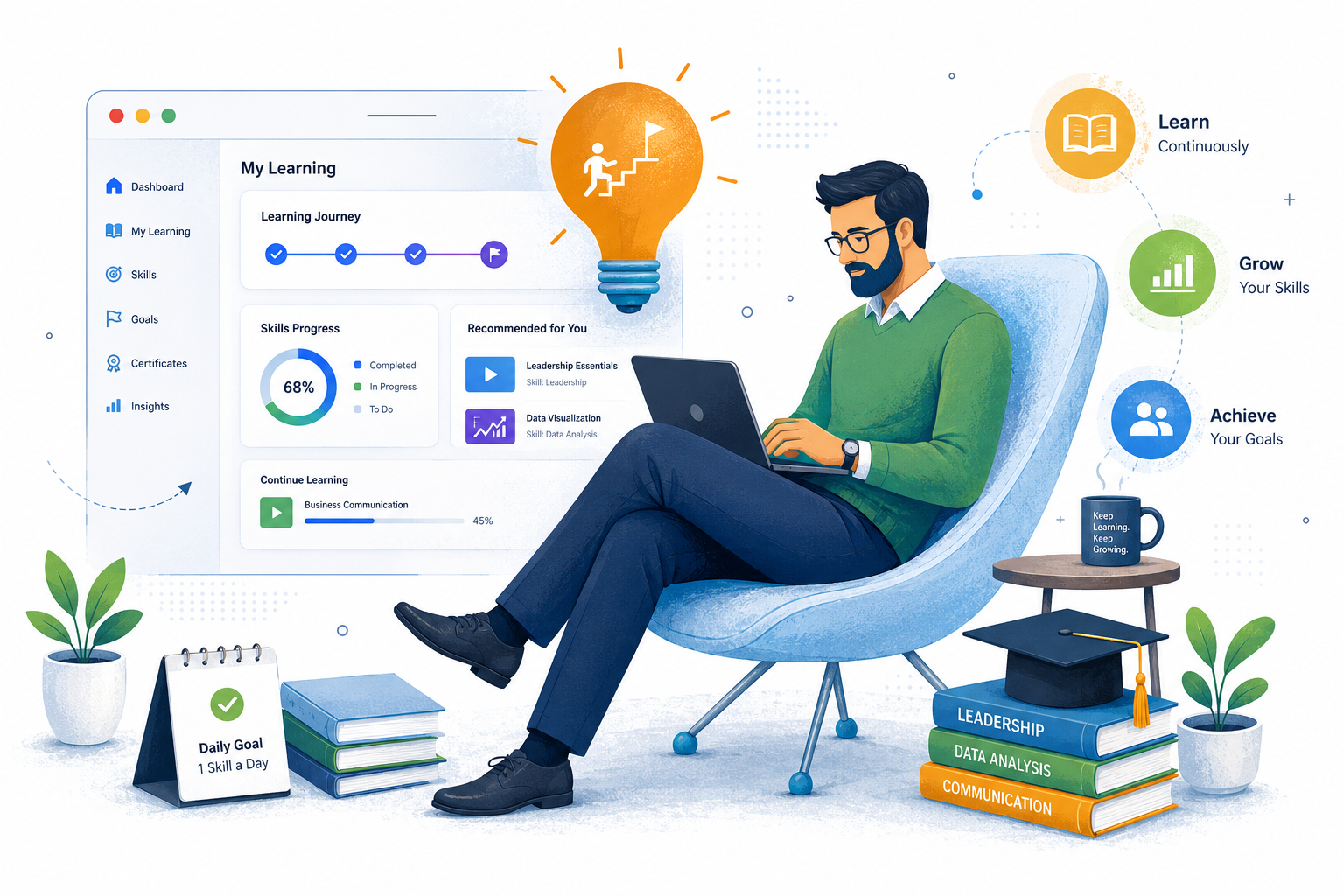
Asynchronous Learning is a training approach that allows learners to access educational content at their own pace and on their own schedule without requiring real-time interaction with instructors or fellow learners.
Instead of attending live training sessions, employees can complete courses whenever it is most convenient, making learning more flexible and accessible.
Common examples of asynchronous learning include recorded webinars, self-paced eLearning courses, videos, discussion forums, podcasts, digital documents, microlearning modules, quizzes, and knowledge assessments.
Learners can pause, revisit, or repeat content as needed, giving them greater control over their learning experience.
For example, a multinational organization launching a new compliance training program can upload the course to its Learning Management System (LMS). Employees in India, the United States, the United Kingdom, and the Middle East can complete the training according to their local working hours rather than attending a single live session.
Progress, assessment scores, and course completion are automatically tracked, ensuring consistent learning outcomes across the global workforce.
As remote work, hybrid workplaces, and geographically distributed teams continue to grow, asynchronous learning has become one of the most widely adopted methods for corporate Learning and Development (L&D).
How Does Asynchronous Learning Work?
Unlike instructor-led classroom training, asynchronous learning does not require learners and instructors to be present at the same time.
The typical learning process includes:
- The organization creates or uploads digital learning content.
- Learners access the content through an LMS or Learning Experience Platform (LXP).
- Employees complete lessons at their own pace.
- Assessments measure understanding and knowledge retention.
- Learning progress is automatically tracked and reported.
- Learners can revisit content whenever they need a refresher.
This self-paced approach allows employees to fit learning into their work schedules without disrupting daily operations.
What Are the Common Types of Asynchronous Learning?
Organizations use various formats to deliver asynchronous learning experiences.
Popular examples include:
- Self-paced eLearning courses
- Recorded webinars
- Video tutorials
- Microlearning modules
- Discussion forums
- Interactive simulations
- Digital learning paths
- Podcasts
- Knowledge articles
- Online assessments and quizzes
- Downloadable learning resources
- Certification programs
Modern LMS and LXP platforms often combine several of these formats to create engaging and personalized learning journeys.
Why Is Asynchronous Learning Important?
Today's workforce is more distributed than ever. Employees work from different offices, countries, and time zones, making it difficult to schedule live training sessions that accommodate everyone.
Asynchronous learning solves this challenge by providing:
- Learning anytime and anywhere
- Greater flexibility for employees
- Consistent training across locations
- Reduced scheduling conflicts
- Better accessibility for global teams
- Improved scalability for enterprise learning
Instead of coordinating calendars across multiple regions, organizations can deliver the same high-quality learning experience to every employee.
What Are the Benefits of Asynchronous Learning?
Organizations adopting asynchronous learning often experience improvements in both learner engagement and operational efficiency.
Flexible Learning Schedules
Employees can complete training when it best fits their workload, reducing interruptions to productivity.
Improved Knowledge Retention
Learners can revisit videos, documents, and learning modules whenever they need reinforcement, leading to better long-term retention.
Scalability
A single course can be delivered to thousands of learners simultaneously without requiring additional instructors.
Cost Efficiency
Organizations reduce expenses associated with classroom training, travel, venue bookings, and instructor-led sessions.
Consistent Learning Experience
Every learner receives the same content, messaging, and assessments regardless of location or time zone.
Better Learning Analytics
Digital learning platforms track course completion, assessment scores, learning time, and learner engagement, providing valuable insights for L&D teams.
Where Is Asynchronous Learning Used?
Asynchronous learning supports a wide range of corporate training initiatives, including:
- Employee onboarding
- Compliance training
- Product training
- Sales enablement
- Leadership development
- Technical skills training
- Customer service training
- Software adoption
- Cybersecurity awareness
- Professional certification programs
It is particularly valuable for organizations with hybrid, remote, or international workforces.
How Does Technology Support Asynchronous Learning?
Modern Learning Management Systems (LMSs) and Learning Experience Platforms (LXPs) make asynchronous learning more engaging and effective by offering:
- Personalized learning recommendations
- Mobile learning access
- AI-powered content suggestions
- Learning paths based on roles and skills
- Interactive assessments
- Gamification
- Progress tracking
- Discussion forums
- Digital certificates
- Learning analytics dashboards
These technologies help learners stay engaged while providing organizations with measurable insights into training effectiveness.
What Challenges Can Asynchronous Learning Present?
While asynchronous learning offers significant flexibility, organizations should address a few potential challenges.
Common considerations include:
- Reduced real-time interaction with instructors
- Limited opportunities for spontaneous discussion
- Learners need self-discipline and motivation
- Delayed feedback compared to live sessions
These challenges can be addressed by combining asynchronous learning with discussion forums, virtual office hours, coaching sessions, and collaborative learning activities.
Frequently Asked Questions
Is asynchronous learning the same as online learning?
Not necessarily. Online learning can be either asynchronous or synchronous. Asynchronous learning is one type of online learning where learners complete training independently without live instruction.
Can asynchronous learning include assessments?
Yes. Most asynchronous courses include quizzes, assignments, simulations, practical exercises, and final assessments to measure learner understanding and progress.
Is asynchronous learning suitable for compliance training?
Yes. It is widely used for compliance training because organizations can deliver standardized content to large numbers of employees while automatically tracking completion and assessment results.
Can asynchronous learning support global organizations?
Absolutely. It is one of the most effective training models for organizations with employees across multiple countries and time zones, ensuring consistent learning without requiring everyone to attend live sessions.
Key Takeaway
Asynchronous learning gives employees the flexibility to learn at their own pace while helping organizations deliver consistent, scalable, and cost-effective training.
By leveraging digital learning platforms, recorded content, interactive modules, and self-paced learning paths, businesses can support continuous employee development without the limitations of scheduled classroom sessions.
For organizations managing global, hybrid, or remote workforces, asynchronous learning has become a fundamental strategy for delivering effective, accessible, and business-aligned corporate learning.
To know more about such learning and development terms, click to visit Invince's L&D Glossary.
Our latest blogs


Ready to Revolutionize Learning at Your Organization?
Join 400+ enterprises using Invince to upskill, reskill, and retain top talent.
Ready to Revolutionize Learning at Your Organization?
Join 400+ enterprises using Invince to upskill, reskill, and retain top talent.

Ready to Revolutionize Learning at Your Organization?
Join 400+ enterprises using Invince to upskill, reskill, and retain top talent.