

What Is Collaborative Learning? Benefits, Examples, and Best Practices for Enterprises
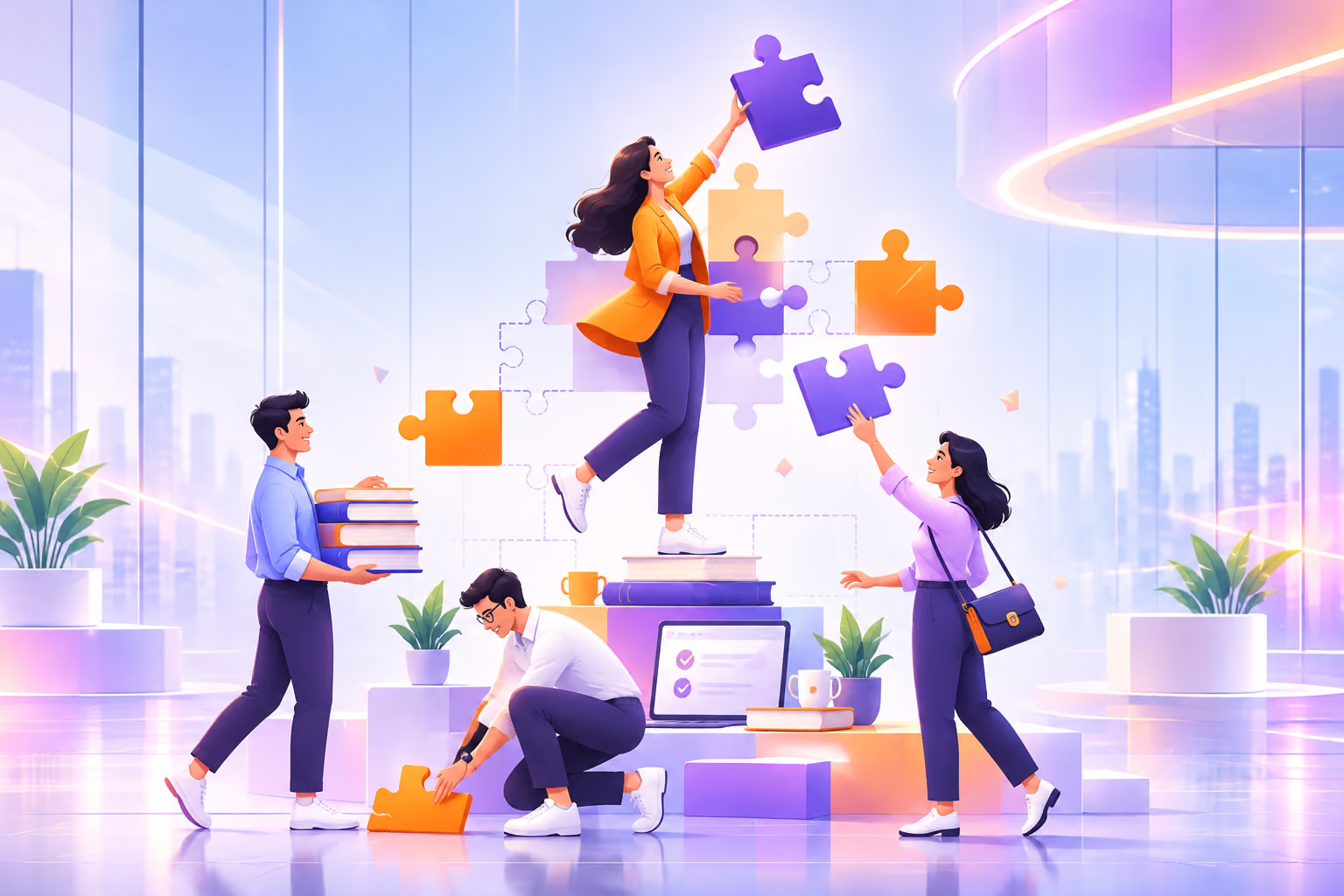
Employees bring different experiences, skills, and perspectives to the workplace. When they learn together, they can solve problems, exchange knowledge, and develop capabilities that may be difficult to build through individual learning alone.
This is the idea behind collaborative learning.
Collaborative learning is an approach in which individuals learn through group activities, discussions, shared projects, and collective problem-solving.
Instead of relying entirely on an instructor or learning material, participants contribute their knowledge and learn from one another.
For organizations, collaborative learning creates opportunities to connect people across teams, departments, and locations. It encourages knowledge-sharing, strengthens communication, and helps employees understand different business perspectives.
As part of an enterprise learning strategy, it can support stronger teamwork, employee development, and a culture of continuous learning.
How Does Collaborative Learning Work?
Collaborative learning involves employees working together to achieve a shared learning objective. Each participant contributes ideas, knowledge, or experience to the process.
A typical collaborative learning activity follows these steps:
- Define a shared objective: Establish the problem, topic, or capability the group needs to explore.
- Form learning groups: Bring together employees with relevant or complementary skills.
- Encourage participation: Use discussions, brainstorming, case studies, or group assignments.
- Share perspectives: Allow participants to explain their reasoning and learn from different viewpoints.
- Develop a collective solution: Work together to reach conclusions or complete the activity.
- Reflect on the outcome: Discuss what the group learned and how the knowledge can be applied at work.
For example, a cross-functional team comprising employees from marketing, sales, and product development could work together on a customer retention case study. Each department contributes a different perspective, helping the group develop a more informed solution.
What Are the Different Types of Collaborative Learning?
Organizations can use different collaborative learning formats depending on the learning objective and employee audience.
- Group discussions: Employees exchange ideas and perspectives on a specific topic.
- Case studies: Teams analyze business situations and develop solutions together.
- Group projects: Employees collaborate on assignments that require shared responsibility.
- Peer learning: Colleagues exchange knowledge, experiences, and practical advice.
- Knowledge-sharing sessions: Employees present expertise, lessons, or best practices to others.
- Cross-functional learning: Employees from different departments work together to understand business challenges.
- Online collaboration: Distributed teams use digital platforms, discussion forums, and virtual classrooms to learn together.
These methods can be combined to create learning experiences that encourage active participation and practical application.
Why Is Collaborative Learning Important for Enterprises?
Large organizations often operate across departments, geographies, and business functions. Employees may have valuable knowledge within their teams, but that knowledge does not always reach the people who could benefit from it.
Collaborative learning helps address this challenge by creating structured opportunities for employees to exchange information and learn from different perspectives.
Its benefits include:
- Better knowledge-sharing: Employees can share practical insights and expertise across teams.
- Stronger teamwork: Shared activities encourage communication and collective responsibility.
- Improved problem-solving: Different perspectives help teams explore challenges more effectively.
- Greater employee engagement: Active participation makes learning more interactive.
- Cross-functional understanding: Employees gain insight into how different business functions operate.
- Collective capability development: Teams build knowledge and skills together rather than relying only on individual development.
For L&D leaders, collaborative learning can also help identify internal expertise and encourage employees to contribute to organizational learning.
What Are Some Examples of Collaborative Learning in the Workplace?
Collaborative learning becomes more meaningful when employees work on situations connected to their actual responsibilities.
Here are some practical examples:
Sales and marketing alignment: Sales and marketing teams collaborate to analyze customer feedback and identify ways to improve lead quality and conversion.
Leadership development: Managers participate in group discussions about employee engagement, conflict resolution, and performance management.
Compliance learning: Employees work through a case study involving a potential compliance violation and discuss the appropriate response.
New employee onboarding: New hires participate in group activities to understand organizational processes, workplace expectations, and team responsibilities.
Technical knowledge-sharing: Experienced employees demonstrate tools, processes, or best practices to colleagues.
These activities help employees connect learning with workplace challenges.
How Can Technology Support Collaborative Learning?
Technology makes collaborative learning easier to organize and deliver, particularly when employees work across different locations or time zones.
A Learning Management System (LMS) can support structured learning programs, assessments, and access to learning resources. Platforms such as InvinceLMS can help organizations manage learning activities as part of a broader enterprise learning strategy.
Other Invince capabilities can complement this approach:
- Invince LXP: Supports a learner-focused experience by helping employees discover relevant learning content and development opportunities.
- Invince Craft: Helps L&D teams create digital learning modules and assessments that can prepare employees for group activities or reinforce concepts afterward.
- Invince Plethora: Provides access to a broad library of learning resources that employees can explore and discuss as part of collaborative development.
For example, an organization could assign a learning module through InvinceLMS, ask employees to review relevant resources from Plethora, and bring participants together for a group discussion.
Craft can help create supporting digital content, while Invince LXP can contribute to a more personalized learning experience.
The objective is to connect individual learning resources with opportunities for shared understanding and application.
What Challenges Should Organizations Consider?
Collaborative learning requires thoughtful planning. Without clear objectives and participation guidelines, group activities can become unstructured discussions with limited learning value.
Common challenges include:
- Unequal participation among group members.
- Scheduling difficulties across locations and time zones.
- Dominance by a few participants.
- Limited contribution from employees who are less comfortable speaking.
- Difficulty measuring individual learning within group activities.
Organizations can address these challenges by assigning clear responsibilities, setting discussion guidelines, using smaller groups, and combining group activities with individual assessments or reflections.
How Can Organizations Measure Collaborative Learning Effectiveness?
Measuring collaborative learning requires looking beyond attendance and activity completion.
L&D teams can evaluate:
- Participation in group activities.
- Quality of contributions and discussions.
- Completion of collaborative assignments.
- Individual assessment performance.
- Peer and facilitator feedback.
- Application of shared learning in workplace projects.
- Improvements in relevant team or business outcomes.
Combining these indicators helps organizations understand whether collaborative activities are contributing to meaningful learning.
What Is the Role of Collaborative Learning in Modern Enterprise Learning?
Collaborative learning recognizes that employees do not develop capabilities only through formal courses. They also learn by exchanging experiences, solving problems together, and understanding how others approach workplace challenges.
For enterprises, this creates opportunities to strengthen teamwork, improve knowledge-sharing, and develop capabilities across departments.
With solutions such as InvinceLMS, Invince LXP, Invince Craft, and Invince Plethora, organizations can connect structured learning, content creation, content discovery, and curated resources with collaborative development activities.
Ultimately, collaborative learning helps organizations turn individual knowledge into shared organizational capability. When employees learn from one another, they contribute not only to their own development but also to a stronger, more connected learning culture.
To know more about such learning and development terms, click to visit Invince's L&D Glossary.
Our latest blogs


Ready to Revolutionize Learning at Your Organization?
Join 400+ enterprises using Invince to upskill, reskill, and retain top talent.
Ready to Revolutionize Learning at Your Organization?
Join 400+ enterprises using Invince to upskill, reskill, and retain top talent.

Ready to Revolutionize Learning at Your Organization?
Join 400+ enterprises using Invince to upskill, reskill, and retain top talent.