

8 Things To Follow While Implementing Blended Learning Via An LMS


In our earlier blog post, 5 Tips For Managing Blended Learning Through An LMS, we had discussed the ways in which organizations can mix different teaching materials and tools into an integrated learning experience using an LMS. This was mainly focused on organizations that were currently leveraging their LMSs for managing blended learning. But what about those that still haven’t treaded these waters?
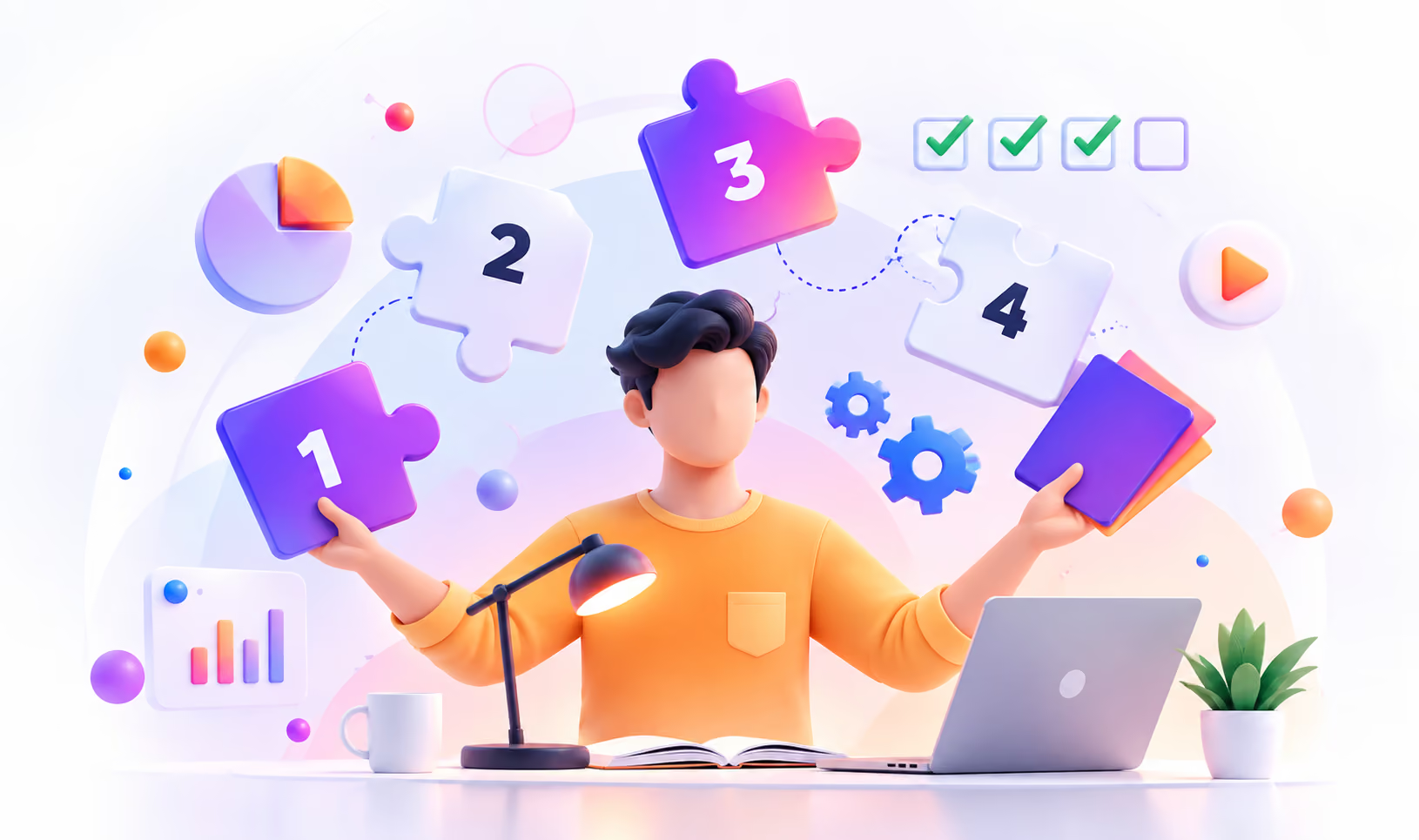
Whether you have been managing disparate training programs via an LMS or have been doing it the traditional way and are now looking at adopting an LMS for managing blended learning, the 8 things mentioned below will help you to smoothly bring in blended learning in your L&D plan.
Needs, Objectives and Plan
Find out the need of blended learning in your organization and how it will impact your learners’ and administrative performance. Some of the common needs are:Once the need is identified, you need to set objectives and define what other things you wish to achieve by leveraging LMS for blended learning. These needs and objectives, which may or may not complement each other, will largely define the strategic plan for implementing blended learning in your organization. Right from selecting the right LMS to implementing it in your workplace, everything falls under planning.
- Time and cost savings
- Increasing the reach of training
- Increasing flexibility (for administrators and learners)
Infrastructure
Kick the tires and see if your current infrastructure, like IT set-up, network connectivity, etc., is robust enough to run blended learning in a smooth way. When delivering blended learning programs through an LMS, ensure that every learner has easy access to the LMS as and when they need it, along with other components of the blend. Your LMS vendor can be your best guide for the right infrastructure setup and to assess the readiness of your current setup to support blended learning.
Stakeholders
Create a list of all stakeholders who will be a part of your blended learning program, right from the management personnel, the technical team, and instructors to the end users (learners). For each of these stakeholders, identify the current pain points faced in delivering/ managing/ accessing training and how these will be addressed with the LMS.
Training
Before launching the blended learning program, provide training to your instructors, administrators and learners, and introduce them to every aspect of the LMS and how it can modify their current training process. Inform them about various technical features and learning capacities of the LMS in respect of blended learning, while underlining the benefits of using them. Doing a pilot training session for a small cross section of the learners can be helpful too.
LMS Features
Identify the key features in an LMS that you will use as a part of your blended learning program. With Virtual Classroom and Classroom Management (ILT) modules, you can run your training programs with automated schedules, incorporate web conferencing tools like WebEx or GoToMeeting for delivering learning sessions to and from remote locations. The eLearning module can be used to deliver courses, videos and other online learning resources as a pre-course or post-course learning material to an ILT session. You can also leverage the LMS’ social learning and collaborative features to enable knowledge collaboration and facilitate knowledge sharing within and outside teams. MIS and reporting are other key features that will help you in tracking the progress of your training plan.
Learning Resources
One of the main advantages of leveraging an LMS to deliver blended learning is the LMS’ ability to support a wide range of learning resources. So along with the key features, it is important to identify key resources that will be delivered via these features. Frequently accessed/ required resources like how-to videos, self-help documents, FAQs, etc. can be uploaded in a common repository for anytime, self-paced viewing. You can upload training videos, tutorials, lectures, reference material, guide books, etc., which your learners can access before, during or after their training as an extended support to recall information or to improve their job performance. With help of sound instructional designing, you can design and deliver custom made courses, which are aligned to supplement your current training format.
Assessments
With an LMS, you can convert all your manual assessments into an online format, which will not only make conducting tests and assessments easy for the administrator, but also for the learners to take them online. Instant performance reports can also be generated for review and analysis.
Time/Cost Saving
Do not see blended learning primarily as a means to slash your time and costs resources spent on training. Instead, try to streamline your training plan with the LMS and blended learning; costs and time benefits are sure to follow.
If you would like to learn more on this topic or would like to see how our Learning Management System, UpsideLMS, enables blended learning, you can get in touch with Amol Shinde, AVP Sales (India) at amol.shinde@upsidelearning.co
Our latest blogs


Ready to Revolutionize Learning at Your Organization?
Join 400+ enterprises using Invince to upskill, reskill, and retain top talent.
Ready to Revolutionize Learning at Your Organization?
Join 400+ enterprises using Invince to upskill, reskill, and retain top talent.

Ready to Revolutionize Learning at Your Organization?
Join 400+ enterprises using Invince to upskill, reskill, and retain top talent.