

What Is Blended Learning? Definition, Examples, Benefits, and Best Practices
What Is Blended Learning? Definition, Examples, Benefits, and Best Practices
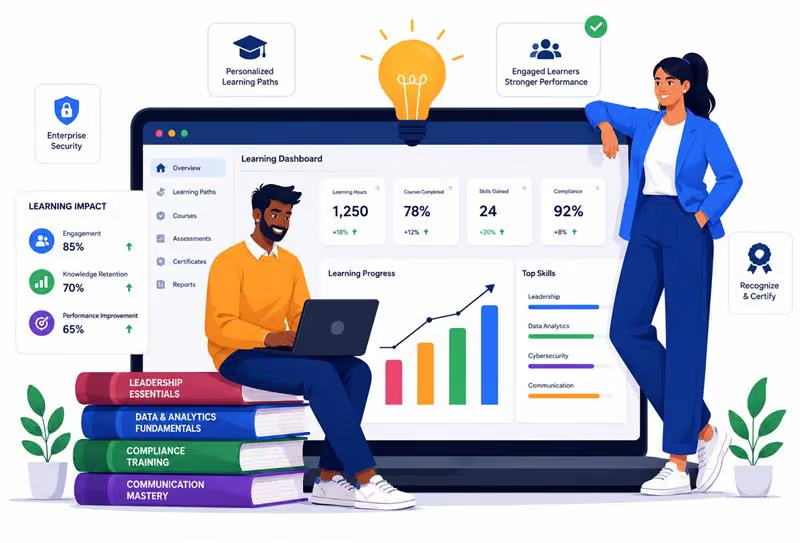
Blended Learning combines classroom-based instruction with digital learning to create a more flexible and engaging training experience. Instead of relying entirely on face-to-face sessions or self-paced online courses, organizations use both approaches based on what learners need to achieve.
For example, employees might complete an online module covering product knowledge, policies, or technical concepts before attending an instructor-led workshop. The classroom session can then focus on role-plays, group discussions, simulations, coaching, or practical application.
This model gives organizations a practical way to combine the scalability of digital learning with the interaction and hands-on practice of classroom training. It is particularly useful when employees need both knowledge and opportunities to apply that knowledge in realistic situations.
For L&D teams, blended learning can also support different learning preferences, work schedules, locations, and levels of experience while creating a more structured learning experience.
What Does Blended Learning Mean in Corporate Training?
Blended learning means intentionally combining digital learning and face-to-face learning within the same training program.
The digital component might include:
- Self-paced eLearning
- Recorded webinars
- Videos
- Online assessments
- Microlearning
- Digital reading materials
- Learning paths
- Interactive simulations
The classroom component might include:
- Instructor-led training
- Workshops
- Role-plays
- Group exercises
- Case studies
- Coaching
- Practical demonstrations
- Peer discussions
The important distinction is that these elements work together. Blended learning is not simply putting an online course and a classroom session next to each other. The two formats should complement each other and contribute to the same learning objective.
How Does Blended Learning Work?
A typical blended learning program follows a sequence that moves learners from knowledge acquisition to practical application.
1. Learners build foundational knowledge online
Employees first complete digital modules covering the concepts they need to understand.
For example, a sales training program might include online modules about:
- Product features
- Customer personas
- Competitive positioning
- Pricing
- Sales methodology
Learners can complete this material at their own pace before attending a workshop.
2. Learners apply their knowledge in a classroom
The instructor-led component focuses on activities that benefit from human interaction.
A sales team could participate in:
- Customer role-plays
- Objection-handling exercises
- Group discussions
- Sales simulations
- Peer feedback
This allows learners to move from knowing something to practicing it.
3. Learners reinforce the learning digitally
After the workshop, employees can return to digital learning for reinforcement.
This might include:
- Short refresher modules
- Knowledge checks
- Follow-up assessments
- Microlearning
- Additional resources
- Practice activities
This creates a learning cycle rather than treating training as a single event.
What Is an Example of Blended Learning?
Consider a leadership development program for newly appointed managers.
A blended learning program could look like this:
Before the workshop
- Complete an online module on leadership fundamentals.
- Watch videos about difficult conversations.
- Take a short knowledge assessment.
- Review a leadership case study.
During the workshop
- Discuss real workplace scenarios.
- Practice giving feedback through role-play.
- Work through a team conflict simulation.
- Receive feedback from an instructor and peers.
After the workshop
- Complete a short reflection activity.
- Access follow-up microlearning.
- Complete a workplace assignment.
- Revisit relevant resources when needed.
The digital component provides flexibility and foundational knowledge. The classroom component provides interaction and practice. Together, they create a more complete learning experience.
What Are the Benefits of Blended Learning?
Blended learning can provide several advantages for organizations and employees.
Does Blended Learning Improve Flexibility?
Yes. Digital learning allows employees to complete foundational content when it fits their schedules, while classroom sessions can be reserved for activities that require real-time participation.
This is particularly useful for distributed or hybrid workforces.
Can Blended Learning Improve Knowledge Retention?
It can support retention by giving learners multiple opportunities to encounter and apply information.
A learner might:
- Learn a concept through an online module.
- Discuss it with peers.
- Apply it during a workshop.
- Practice it at work.
- Reinforce it through digital learning later.
This repeated exposure helps connect theoretical knowledge with practical application.
How Does Blended Learning Support Different Learning Needs?
Not every learner needs the same amount of instructor interaction.
Digital content allows employees to pause, revisit, or complete foundational material independently. Classroom sessions can then focus on areas where discussion, coaching, or practice adds greater value.
Can Blended Learning Scale Across Large Organizations?
Yes. Digital content can provide standardized foundational training to large groups, while instructor-led sessions can focus on smaller groups and higher-value activities.
This makes it possible to balance scale with human interaction.
Does Blended Learning Reduce Time Spent in the Classroom?
It can. Instead of using classroom time to deliver information that could be consumed digitally, instructors can concentrate on application, discussion, practice, and feedback.
This can make face-to-face training more purposeful.
What Is the Difference Between Blended Learning and Online Learning?
The main difference is the role of face-to-face instruction.
Blended Learning
Online Learning
Combines digital and classroom learning
Primarily delivered online
Includes instructor-led interaction
May be fully self-paced or virtual
Supports practical activities
Often focuses on digital content delivery
Can include workshops and role-plays
Can include videos, modules, quizzes, and discussions
Useful for knowledge plus application
Useful for scalable and flexible content delivery
Blended learning can include synchronous online sessions as well as physical classroom sessions, depending on the organization's training model.
How Does Blended Learning Fit Into a Modern Learning Platform?
Modern learning platforms can help L&D teams organize the different components of a blended program into a structured experience.
For example, an organization can structure learning around:
- Courses: Individual learning units with defined outcomes.
- Enrollments: Registration for a course or learning program.
- Learning Paths: A sequence of courses organized around a topic or skill.
- Learning Journeys: Longer programs containing multiple milestones.
- Milestones: Progress checkpoints that help learners understand where they are in their development.
These concepts are part of the learning vocabulary outlined in the Invince LXP platform framework.
This structure can make blended learning easier to manage because digital modules, workshops, assessments, and development activities can be organized as parts of a broader learning experience.
The Invince LXP materials also describe AI-personalized learning journeys, role and skill mapping, content aggregation, recommendations, and learner progress tracking. These capabilities can help organizations create more relevant learning experiences around employee roles and development needs.
How Can Organizations Design an Effective Blended Learning Program?
A successful blended learning program should start with the learning outcome, not the technology.
A practical approach is:
1. Define what employees need to achieve
Identify the knowledge, skills, or behaviors learners should demonstrate after training.
2. Decide what belongs online
Use digital learning for information that employees can consume independently, such as concepts, demonstrations, policies, and foundational knowledge.
3. Reserve live sessions for application
Use classroom or live sessions for activities that benefit from interaction, including role-plays, coaching, collaboration, and problem-solving.
4. Add reinforcement after training
Use assessments, microlearning, practice activities, and refresher content to reinforce learning after the live session.
5. Measure more than completion
Completion tells you whether someone finished training. Stronger measurement can examine assessment performance, skill development, application, and progress toward role readiness.
This aligns with the broader shift from measuring learning activity alone toward understanding skills and workforce capability. The Invince LXP framework, for example, connects learning with skills, career development, readiness, and workforce intelligence.
When Should Organizations Use Blended Learning?
Blended learning is particularly useful when training requires both knowledge and practice.
Common use cases include:
- Leadership development
- Sales enablement
- Customer service training
- Product training
- Technical skills development
- Manager training
- Employee onboarding
- Safety training
- Professional development
- Behavioral skills training
For example, compliance concepts may be delivered through online modules, while a safety workshop can provide practical exercises and scenario-based discussions.
What Are the Common Challenges of Blended Learning?
Blended learning requires thoughtful design. Simply adding digital content to a classroom program does not automatically create a better learning experience.
Organizations should watch for:
- Poor alignment between online and classroom content
- Too much content before live sessions
- Classroom activities that repeat digital material
- Weak post-training reinforcement
- Difficulty coordinating schedules
- Limited measurement of practical skill development
The solution is to give every component a clear purpose.
Digital learning should prepare, support, or reinforce. Live learning should deepen, practice, or apply.
Frequently Asked Questions About Blended Learning
Is blended learning the same as hybrid learning?
Not always. Blended learning generally refers to intentionally combining different learning formats within a training program. Hybrid learning often describes a live learning environment where some participants attend in person while others participate remotely.
Is blended learning better than classroom training?
It depends on the learning objective. Classroom training is highly valuable for collaboration, coaching, discussion, and hands-on practice. Digital learning is valuable for flexibility, scale, and self-paced learning. Blended learning combines these strengths when both are needed.
Is blended learning suitable for remote employees?
Yes. Digital components can provide flexible access to foundational learning, while live virtual workshops can provide discussion, coaching, and collaboration for distributed teams.
Can an LMS support blended learning?
Yes. A Learning Management System (LMS) can manage digital courses, enrollments, assessments, completion tracking, and learning records. Organizations can also use Learning Experience Platforms (LXPs) to provide personalized discovery, recommendations, learning journeys, and skill-focused development alongside structured learning.
What Is the Main Takeaway From Blended Learning?
Blended learning is not about choosing between digital training and classroom instruction. It is about using each format where it delivers the most value.
Digital learning provides flexibility, accessibility, and scale. Classroom learning adds interaction, practice, coaching, and real-world application. When these elements are designed as one connected experience, organizations can create training that is more practical, engaging, and relevant to how employees actually learn and work.
For modern L&D teams, the goal is not simply to deliver more training. It is to create structured learning experiences that help people learn, practice, apply, and continue developing the skills their roles require.
Our latest blogs

Ready to Revolutionize Learning at Your Organization?
Join 400+ enterprises using Invince to upskill, reskill, and retain top talent.
Ready to Revolutionize Learning at Your Organization?
Join 400+ enterprises using Invince to upskill, reskill, and retain top talent.

Ready to Revolutionize Learning at Your Organization?
Join 400+ enterprises using Invince to upskill, reskill, and retain top talent.