

Workforce Readiness: How to Use Skills Intelligence to Prepare for 2027
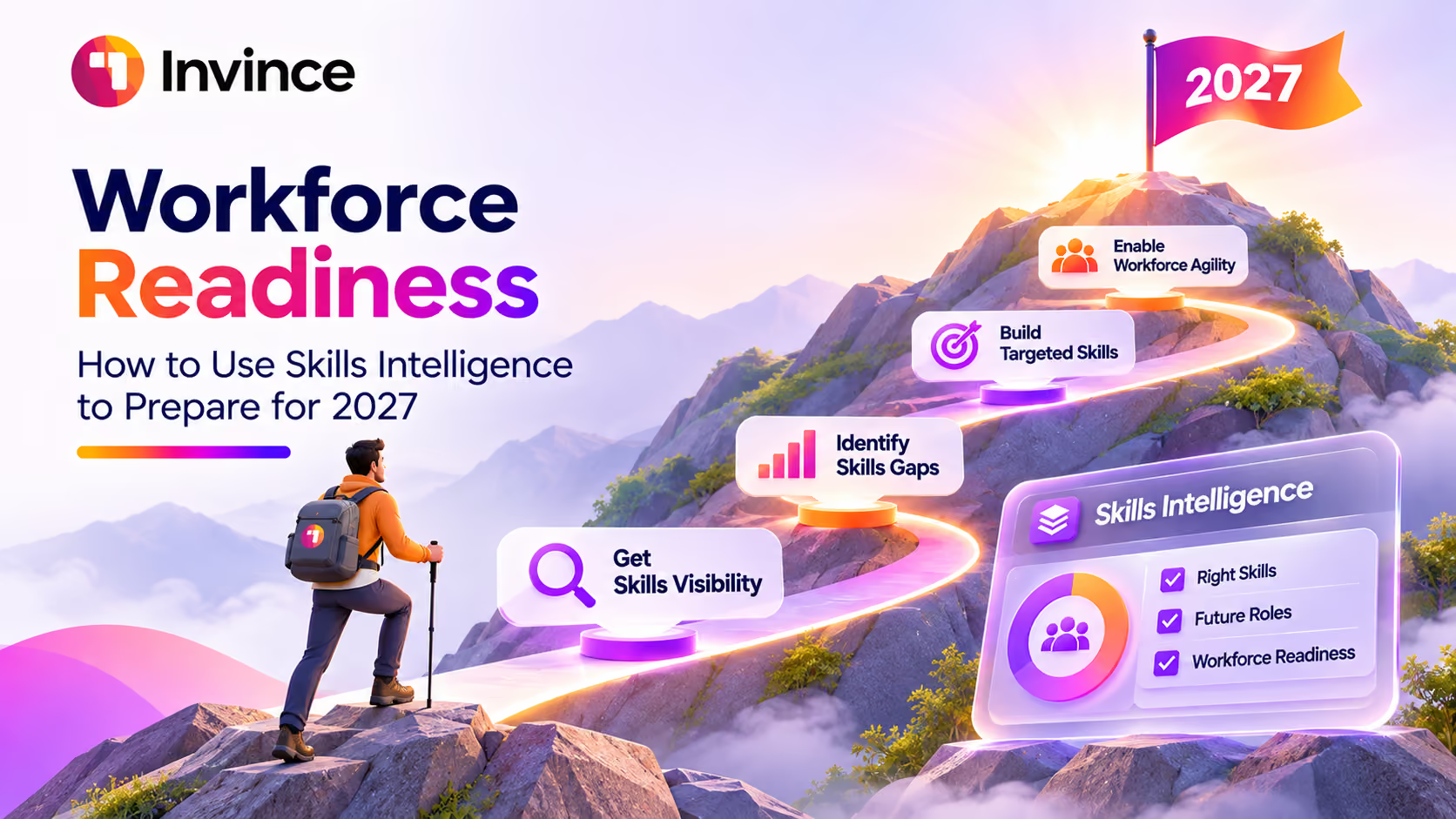
Every major business change, whether a new product, a new market, a regulation or an AI rollout, depends on one question that is often asked too late: are our people ready? Too often the answer comes from course completion reports, which show who attended training but not who can actually do the work.
[[toc]]
Confidence is low. A December 2025 Gartner survey of 197 CxOs and senior business leaders, published in May 2026, found that only 27% of executives have a comprehensive AI strategy and just 20% believe their workforce is truly AI-ready.
This guide explains what workforce readiness means, how to measure it, how skills intelligence makes it visible and how to close readiness gaps. It is written for CHROs, CLOs, HR directors, L&D leaders and business leaders preparing for 2027.
Quick answer: what is workforce readiness? Workforce readiness is the degree to which employees have the skills, knowledge and confidence to perform their current roles and take on the changes the business is planning. Measuring it means comparing people's proven skill levels with what upcoming roles and initiatives will require. Skills intelligence makes this visible across the organisation, and targeted learning and practice close the gaps.
What is workforce readiness?
Workforce readiness has three parts:
- Current-role readiness: can people perform their present role to the expected standard?
- Change readiness: can people take on a specific planned change, such as a new system, process or regulation?
- Future-role readiness: are people ready, or close to ready, for the roles the business will need next?
Readiness is about proven capability, not attendance. A person who completed an AI course is not necessarily ready to use AI tools well in their daily work.
Why workforce readiness matters in 2027
- AI is changing work quickly. New tools and ways of working need new skills, and gaps show up as slow adoption and poor results.
- Change programmes depend on people. Technology and process changes stall when the people using them are not ready.
- Regulation keeps moving. Compliance depends on staff knowing and applying the latest rules.
- Critical roles need cover. Leaders need to know who could step into a critical role if needed.
- Learning budgets need evidence. Readiness data shows where investment is needed and whether it is working.
How to measure workforce readiness
Readiness is measured by comparing proven skill levels with required levels for a role or change.
- Define the target. For each role or initiative, list the skills required and the proficiency level needed.
- Gather evidence. Use assessments, practical tasks, roleplay, manager validation and work outcomes, not completions alone.
- Calculate readiness. For each person, compare current levels with required levels. A simple approach classifies people as ready now, ready with support, ready in six to twelve months or not yet ready.
- Aggregate the view. Roll individual readiness up to team, role, location and organisation level.
- Track over time. Reassess regularly to see whether readiness is improving.
For the detailed method, see our guide to skills gap analysis.
Readiness indicators to track
- Readiness rate: the share of people at or above the required level for priority skills.
- Bench strength: the number of people ready now or soon for each critical role.
- Time to readiness: how long it takes people to reach the required level.
- Change adoption: how quickly and well a new tool, process or system is used after launch.
- Performance outcomes: quality, productivity, customer or safety measures linked to the change.
How skills intelligence makes readiness visible
Skills intelligence provides the continuous, organisation-wide skills view that readiness depends on:
- a shared skills taxonomy and role profiles define what “ready” means
- skills profiles show each person's proven skills and proficiency
- gap analysis updates as people learn and practise
- readiness reports show leaders where the organisation is strong and where it is exposed
- learning recommendations link each gap to the next step
Without this view, readiness is guesswork. With it, leaders can plan change with confidence and target support where it is needed.
How to close readiness gaps
- Targeted learning paths. Give each person learning aimed at their specific gaps for the role or change.
- Practice before go-live. Use simulations, scenario exercises and roleplay so people rehearse new tasks before they matter.
- Learning in the flow of work. Short modules and job aids help people apply new skills at the point of need.
- Manager coaching. Managers check progress, give feedback and confirm when people are ready.
- Champions and peers. Early adopters help colleagues build confidence.
- Reassessment. Confirm readiness with evidence, not assumption.
A readiness plan for a major change: step by step
- Name the change and its date. For example, a new AI-assisted customer service platform going live next quarter.
- List the skills it requires. Tool use, judgement on AI suggestions, escalation and data privacy.
- Assess the people affected. Combine a short skills assessment with manager input.
- Group people by readiness. Ready now, ready with support or needing a full learning path.
- Assign learning and practice. Short modules for some, full paths and practice for others.
- Confirm readiness before launch. Use a practical test or roleplay.
- Support and measure after launch. Track adoption and performance, and give extra help where needed.
The example above is illustrative.
Common workforce readiness mistakes
- Treating completion as readiness. Attendance does not prove capability.
- Assessing too late. Readiness checks the week before go-live leave no time to close gaps.
- One programme for everyone. People start at different levels and need different support.
- No practice. Knowledge without rehearsal often fails under real pressure.
- No follow-up. Readiness fades if skills are not used and reinforced.
How Invince helps prepare your workforce
- Invince LXP provides a configurable skills taxonomy, skills passports, continuous skill gap analysis and organisation-wide skill gap and readiness reporting, with personalised learning journeys to close gaps.
- Invince LMS (formerly UpsideLMS) is an AI-powered enterprise learning platform for onboarding, compliance, upskilling and workforce development, with competency management, assessments, certification management and individual development plans.
- Catalyst lets employees rehearse critical conversations with AI personas and receive structured performance feedback, giving leaders evidence of readiness rather than completion data alone.
- Craft is a GenAI-powered multilingual course builder with support for more than 150 languages, so readiness content can be created and updated quickly for every region, with subject experts reviewing every output.
- Plethora is a curated library of more than 80,000 ready-to-use learning resources.
- Aura provides enterprise AI agents that automate learning, HR and workforce workflows while delivering personalised experiences and actionable insights.
Frequently asked questions about workforce readiness
What is workforce readiness?
Workforce readiness is the degree to which employees have the skills, knowledge and confidence to perform their current roles and take on planned changes and future roles.
How do you measure workforce readiness?
Define the skills and levels required, gather evidence from assessments, practice, manager validation and work outcomes, compare current levels with required levels and track the results over time.
What is the difference between training completion and readiness?
Completion shows that someone attended or finished training. Readiness shows that they can apply the skill to the required standard.
How does skills intelligence support workforce readiness?
Skills intelligence provides an up-to-date, organisation-wide view of skills, so leaders can see who is ready, who is close and where targeted learning is needed.
What is AI readiness in the workforce?
AI readiness is the degree to which employees can use AI tools safely and effectively in their work, judge the quality of AI output and adapt as tasks change.
Conclusion: prove readiness, don't assume it
Readiness is the difference between a change that delivers and one that stalls. Define what ready means for each role and change, measure it with real evidence, make it visible with skills intelligence and close gaps with targeted learning and practice.
Pick the biggest change your organisation has planned for 2027. Define the skills it needs, assess the people affected now and build a readiness plan with time to close the gaps before go-live.
Which planned change in your organisation depends most on people being ready? Share it in the comments, or pass this guide to the person leading it.
Ready to see your workforce readiness clearly? Explore Invince LXP or book a demo.
Ready to Revolutionize Learning at Your Organization?
Join 400+ enterprises using Invince to upskill, reskill, and retain top talent.
Ready to Revolutionize Learning at Your Organization?
Join 400+ enterprises using Invince to upskill, reskill, and retain top talent.

Ready to Revolutionize Learning at Your Organization?
Join 400+ enterprises using Invince to upskill, reskill, and retain top talent.