


5 Key LMS Features That Boost Business ROI in 2027
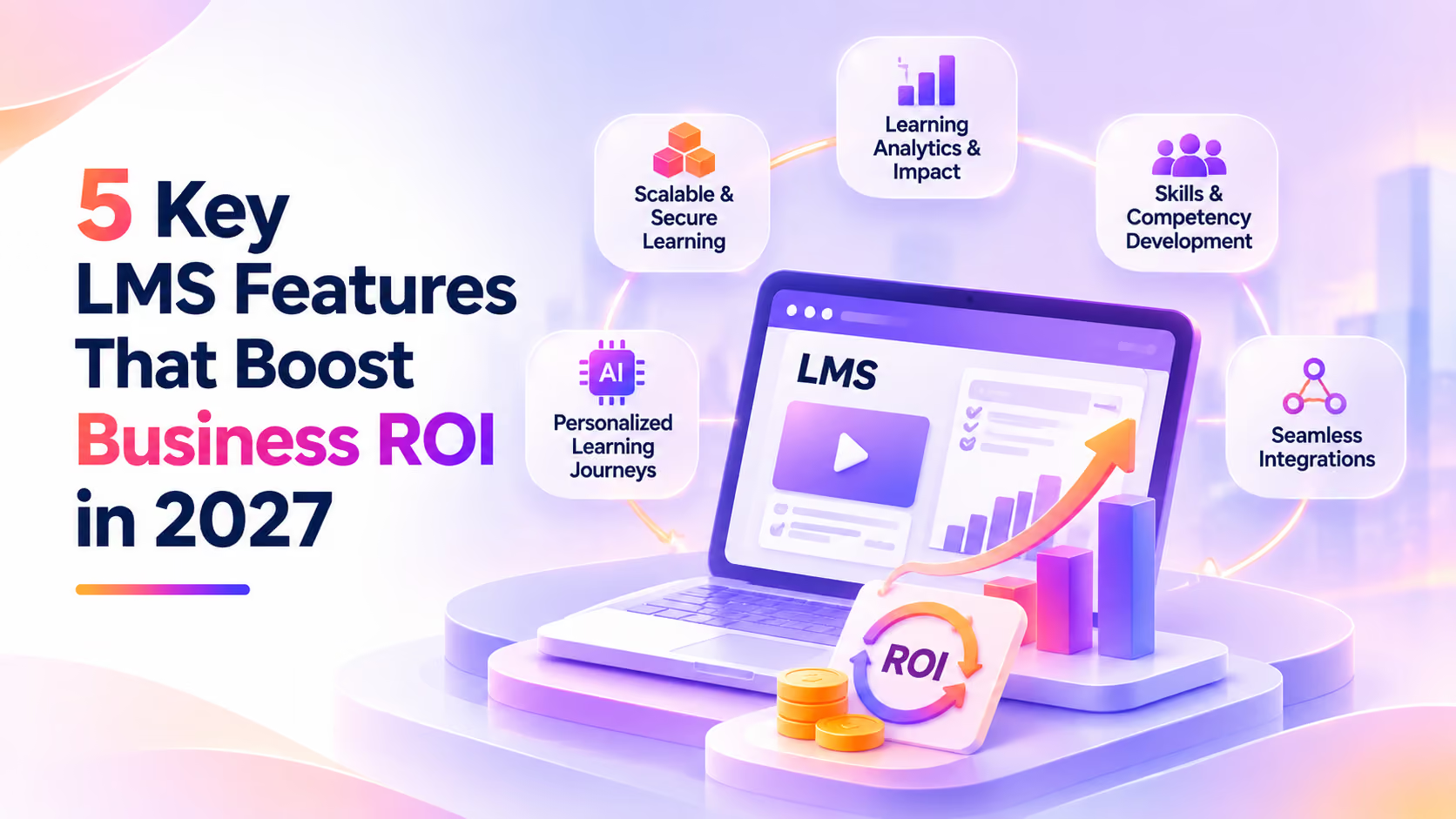
Every budget cycle, the same question reaches the learning and development team: what are we getting back from our learning platform? It is a fair question. A learning management system (LMS) is a significant investment, and leaders want to see it pay off in faster onboarding, fewer compliance gaps, better performance and lower training costs.
[[toc]]
The answer depends less on the LMS itself than on the features you choose and how you use them. Some features cut administration time. Others raise completion rates, shorten time to productivity or reduce compliance risk. And as organisations plan for 2027, the stakes are higher: in the World Economic Forum's Future of Jobs Report 2025, 63% of employers named skills gaps as the biggest barrier to business transformation between 2025 and 2030. A platform that closes those gaps efficiently pays for itself.
This guide covers the five key LMS features that boost business ROI in 2027, how each one creates value, and a simple way to measure LMS ROI. It is written for CHROs, CLOs, HR directors, L&D leaders and finance partners evaluating or renewing an enterprise learning platform.
Quick answer: which LMS features deliver the best ROI? The LMS features that deliver the best ROI in 2027 are (1) an intuitive, mobile-first learner experience, (2) automation and integrations with HR and business systems, (3) AI-powered content creation and personalised learning, (4) automated compliance and certification management, and (5) reporting and analytics that connect learning to business results. Together they reduce training cost and administration time, raise completion and capability, and make the value of learning measurable.
How to think about LMS ROI
LMS ROI comes from two directions:
- Cost savings: less administration, fewer instructor-led sessions, lower travel and venue costs, faster content creation and fewer compliance penalties.
- Performance gains: faster time to productivity for new hires, higher sales or service performance, fewer errors and incidents, better retention and stronger internal mobility.
The features below are the ones that move these numbers most. For each, ask the same question: which cost does it cut, or which result does it improve?
1. An intuitive, mobile-first learner experience
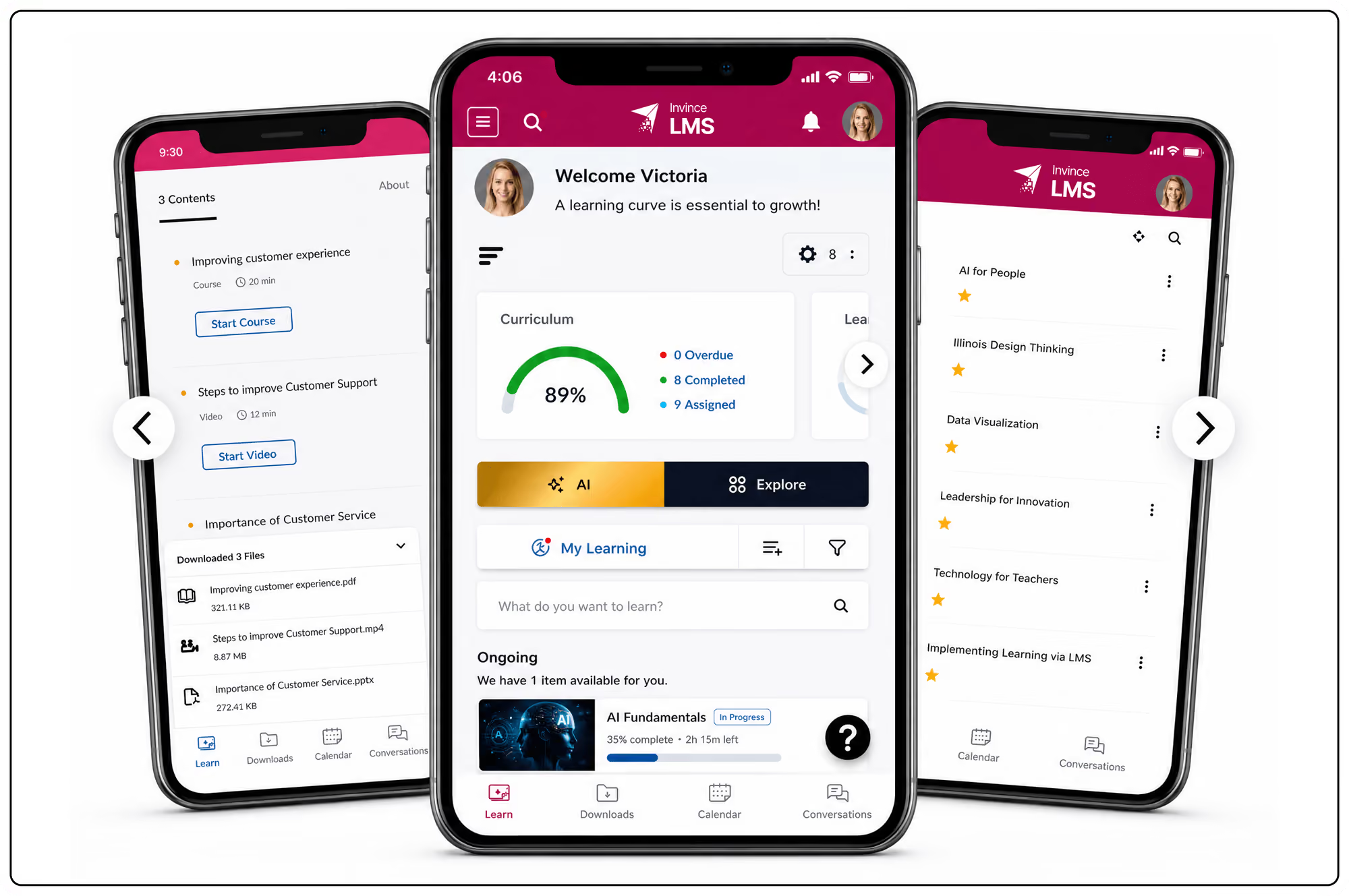
Why it matters for ROI: training only pays back when people complete it. A cluttered or confusing interface lowers completion rates and raises support requests, and every incomplete course is money spent without a return.
What to look for in 2027:
- a clean, simple home page that shows each learner what is due and what is recommended
- a responsive design and mobile app, so frontline, field and shift-based staff can learn on their phones
- short, microlearning formats that fit into the working day
- multilingual support, so global and regional teams learn in the language they work in
- accessibility features for learners with different needs
ROI lever: higher completion rates, fewer support tickets and training that reaches the whole workforce, not just desk-based employees.
2. Automation and integrations with HR and business systems
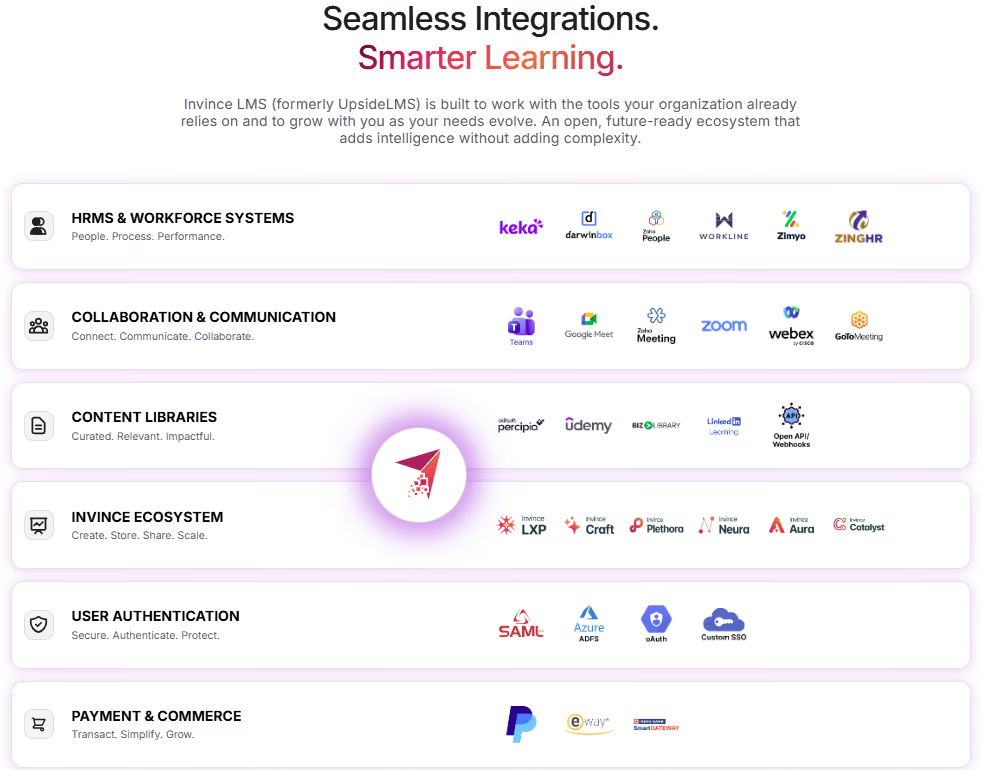
Why it matters for ROI: manual administration is one of the biggest hidden costs of training. Uploading users, assigning courses, chasing completions and compiling reports can take up much of an L&D team's week.
What to look for in 2027:
- HRMS integration, so new joiners, role changes and leavers update the LMS automatically
- rule-based assignment by role, department, grade or location
- single sign-on (SSO), so learners use one login
- integrations with video conferencing for live sessions and with content providers for third-party courses
- automatic reminders and manager escalations
ROI lever: fewer administration hours, faster onboarding and fewer gaps caused by stale user data.
3. AI-powered content creation and personalised learning
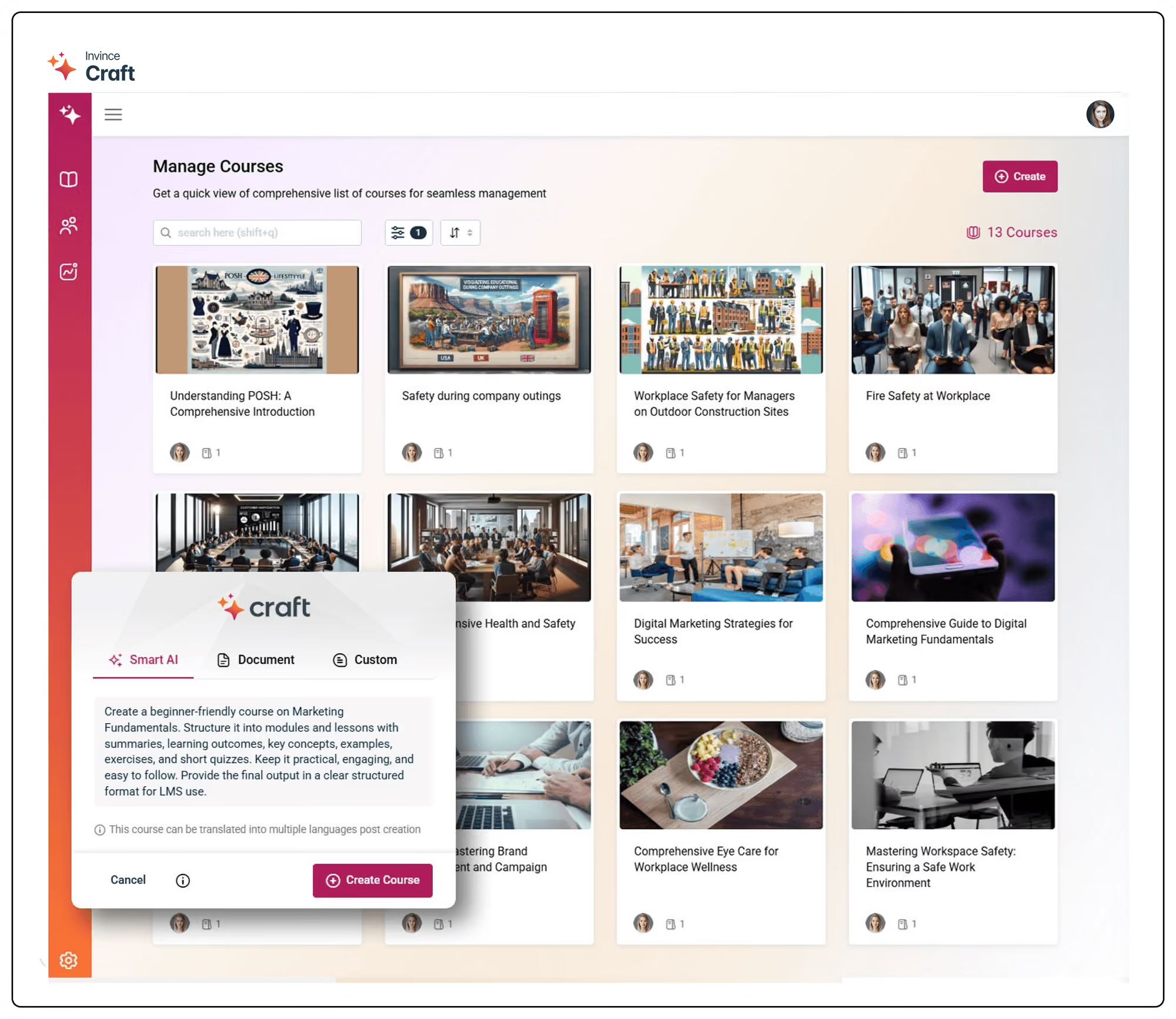
Why it matters for ROI: content development is often the most expensive part of a training programme, and one-size-fits-all courses waste time for experienced employees.
What to look for in 2027:
- generative AI that turns existing documents, policies and SOPs into draft courses, quizzes and summaries, with expert review before publishing
- multilingual course creation, so one update reaches every region at the same time
- personalised recommendations based on role, skills and history
- adaptive learning that lets people skip what they already know
- access to ready-made content libraries for common topics
ROI lever: lower content development cost, faster time to publish and less time spent by employees on content they do not need.
4. Automated compliance and certification management
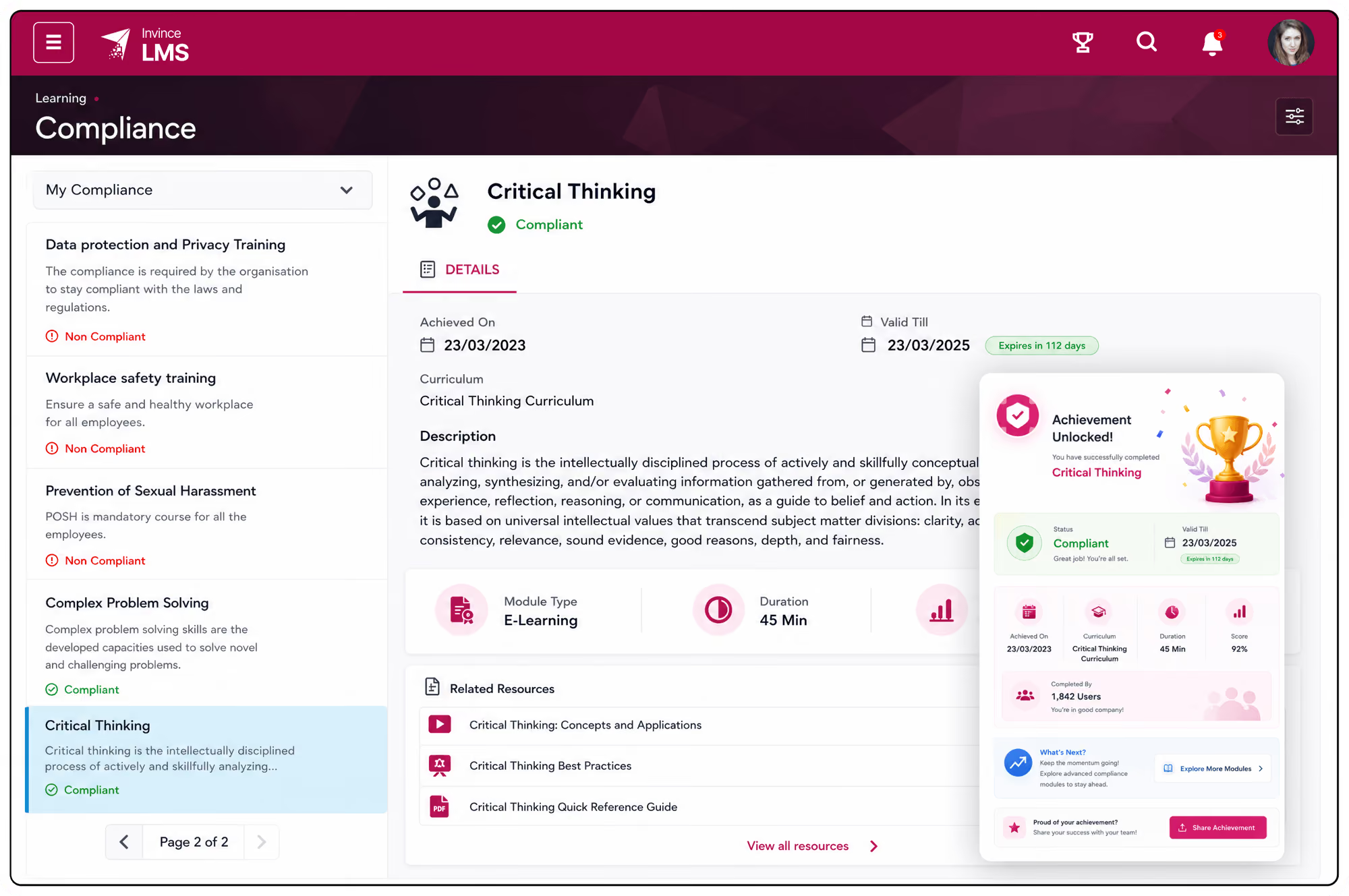
Why it matters for ROI: in regulated industries, a missed certification or an incomplete audit trail can mean fines, failed inspections or lost contracts. Even in less regulated sectors, policy training must be completed and proven.
What to look for in 2027:
- certification tracking with expiry dates and renewal rules
- automatic re-enrolment and reminders before certificates lapse
- escalation to managers for overdue training
- time-stamped records and audit-ready reports
- fast publication of update modules when regulations change
ROI lever: lower compliance risk, less time preparing for audits and fewer costly lapses. Our guide to banking compliance training in 2027 shows how this works in practice.
5. Reporting and analytics that connect learning to business results
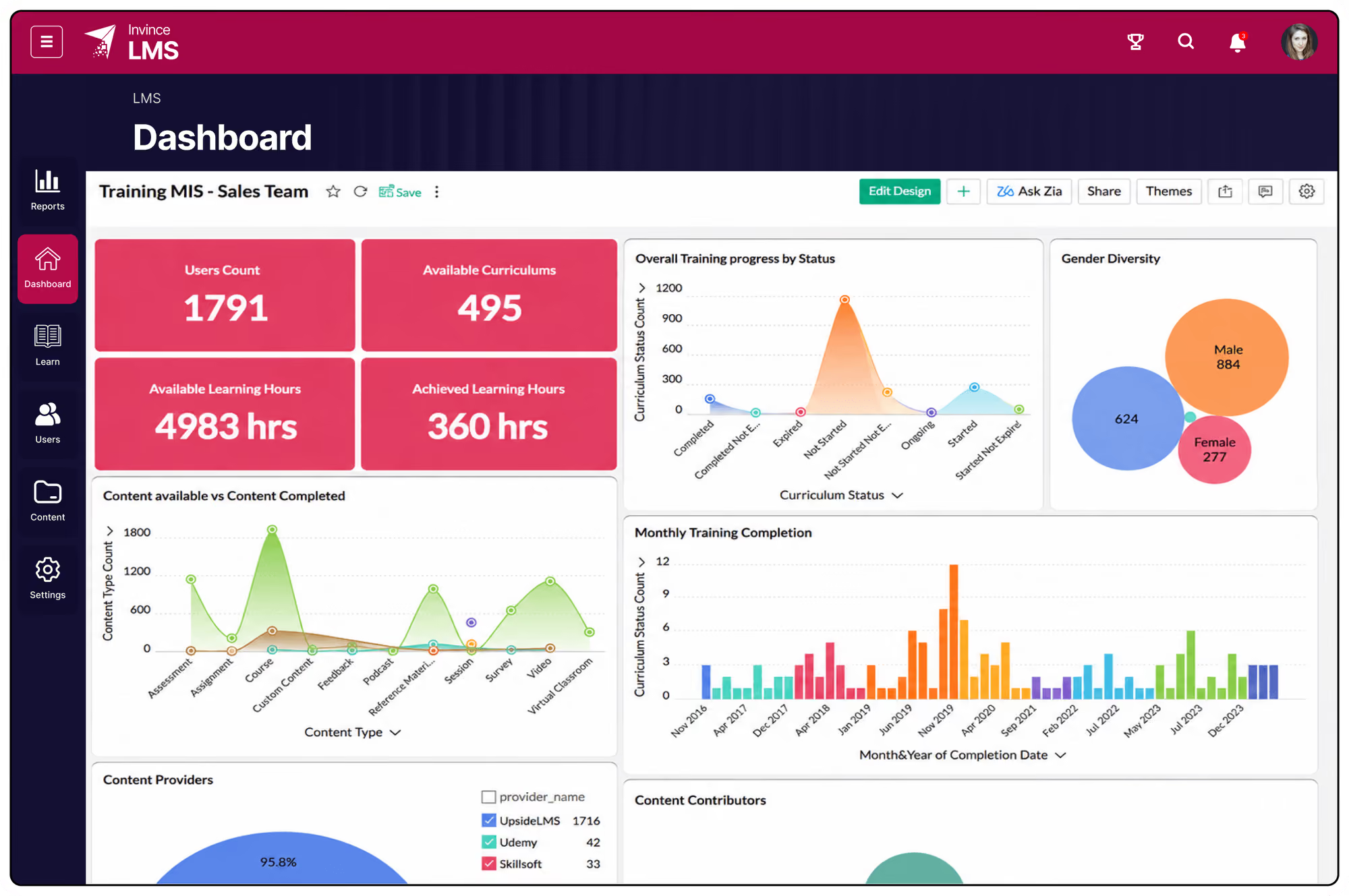
Why it matters for ROI: you cannot prove ROI without data. Basic completion reports show activity, not impact.
What to look for in 2027:
- dashboards for learners, managers, L&D and leadership
- completion, assessment and certification reports by team, site and region
- skills and competency reporting, so you can see where gaps are closing
- the ability to export or connect learning data to HR and business data, such as performance, sales or quality metrics
- scheduled reports for leadership and audit committees
ROI lever: clear evidence of what training achieves, better decisions about where to invest, and earlier action on teams that are falling behind. To see how skills data supports this, read our guide to IT skills gap analysis.
How to measure LMS ROI
A simple, widely used formula is:
LMS ROI (%) = (total benefits − total costs) ÷ total costs × 100
Total costs usually include licence or subscription fees, implementation and integration, content creation or purchase, and internal administration time.
Total benefits usually include:
- administration hours saved, multiplied by the cost of those hours
- instructor-led sessions, travel and venue costs avoided
- faster time to productivity for new hires
- compliance penalties, failed audits or incidents avoided
- measurable performance gains, such as higher sales, fewer errors or better customer scores, linked to specific programmes
Illustrative example only: an organisation spends 50 lakh rupees a year on its LMS, including licences, content and administration. Moving classroom induction online saves 40 lakh in trainer, travel and venue costs, and automated assignment and reporting save 1,500 hours of L&D and HR administration, valued at 15 lakh. Faster onboarding is estimated to be worth a further 20 lakh. Total benefits are 75 lakh, so ROI = (75 − 50) ÷ 50 × 100 = 50%. Use your own figures, and agree with finance how each benefit is valued.
Use a layered view of impact. Many L&D teams use the Kirkpatrick model, which looks at reaction, learning, behaviour and results, with the Phillips ROI methodology adding a fifth level that converts results into money. You do not need every level for every course. Apply the full ROI calculation to your largest or most strategic programmes, and track completion and assessment data for the rest.
LMS ROI checklist for 2027 buyers
Before you choose or renew an LMS, check:
- Can learners find what they need in a few clicks, on any device?
- Does it integrate with your HRMS, SSO and the tools your teams already use?
- Can it create, translate and personalise content with AI, with human review built in?
- Does it manage certifications, renewals and audit-ready records automatically?
- Can its reports show skills and business impact, not just completions?
- Can it separate business units, regions or partners while keeping central reporting?
- What will total cost of ownership look like over three years, including content and administration?
Common mistakes that reduce LMS ROI
- Buying on feature lists alone. Features only create value if they match your biggest costs and goals. Start with the business problem.
- Skipping integrations. Without HR data feeding the LMS, administrators spend hours on manual updates, and reports are never quite right.
- Treating content as an afterthought. An LMS with weak or outdated content will not change performance, however good the platform.
- Measuring only completions. Completions show activity. Link key programmes to business metrics to show impact.
- No baseline. If you do not measure costs and performance before launch, you cannot show improvement after it.
These are some of the most common pitfalls of bad learning and development practices, and they are avoidable with clear goals and the right platform set-up.
How Invince helps you get more from your LMS investment
The Invince AI-powered corporate learning ecosystem covers each of the five ROI features above:
- Invince LMS (formerly UpsideLMS) is an AI-powered enterprise learning platform for onboarding, compliance, upskilling and workforce development. It includes certificate expiration notifications and certification expiration management, and supports a multi-domain set-up for business units, regions and partners with central reporting.
- Invince LXP is an AI-driven learning experience platform that delivers personalised, role-based and skills-focused learning journeys.
- Craft is a GenAI-powered multilingual course builder with support for more than 150 languages and over 25 ready-to-use instructional design templates, with subject experts reviewing every output.
- Plethora is a curated library of more than 80,000 ready-to-use learning resources, so your team can focus its budget on content specific to your business.
To see how these needs differ by sector, read our guide to the 5 industries that benefit most from a learning management system in 2027.
Frequently asked questions about LMS features and ROI
What is LMS ROI?
LMS ROI is the return an organisation gets from its learning management system compared with what it costs. It combines cost savings, such as less administration and fewer classroom sessions, with performance gains, such as faster onboarding and fewer compliance gaps.
How do you calculate the ROI of an LMS?
Use the formula ROI (%) = (total benefits − total costs) ÷ total costs × 100. Costs include licences, implementation, content and administration. Benefits include time and cost saved, risks avoided and measurable performance improvements, valued with your finance team.
Which LMS features matter most for ROI?
The features with the biggest impact are an intuitive, mobile-first learner experience, automation and HR integrations, AI-powered content creation and personalisation, automated compliance and certification management, and reporting that links learning to business results.
How does AI improve LMS ROI?
AI reduces content development time by drafting courses from existing documents, makes multilingual delivery faster, personalises learning so employees skip what they already know and highlights teams at risk of missing deadlines. Human review of AI-generated content is still essential.
How long does it take to see ROI from an LMS?
Savings from automation, online delivery and reduced administration usually appear first. Performance gains take longer to measure, so set a baseline before launch and track key programmes over time.
What should I look for when renewing my LMS in 2027?
Check whether your current platform supports AI content creation, HR integrations, automated certification management, mobile learning and skills-based reporting, and compare total cost of ownership over three years against the benefits you can measure.
Conclusion: choose features that pay back
The best LMS for ROI is not the one with the longest feature list. It is the one whose features cut your biggest costs and improve the results your business cares about. In 2027, that means an easy, mobile-first experience, deep automation and integrations, AI-powered content and personalisation, automated compliance, and analytics that prove impact.
Start by listing your three biggest training costs and the three business results you most want to improve. Then check which LMS features address them, and measure the change.
Which LMS feature has delivered the biggest return for your organisation? Share it in the comments, or pass this guide to the person preparing your next learning technology budget.
Ready to see what an LMS can return for your business? Book an Invince LMS demo to see automation, AI content creation and analytics in action.
Ready to Revolutionize Learning at Your Organization?
Join 400+ enterprises using Invince to upskill, reskill, and retain top talent.
Ready to Revolutionize Learning at Your Organization?
Join 400+ enterprises using Invince to upskill, reskill, and retain top talent.

Ready to Revolutionize Learning at Your Organization?
Join 400+ enterprises using Invince to upskill, reskill, and retain top talent.