


Strategic Workforce Planning with AI: A Practical Guide for 2027
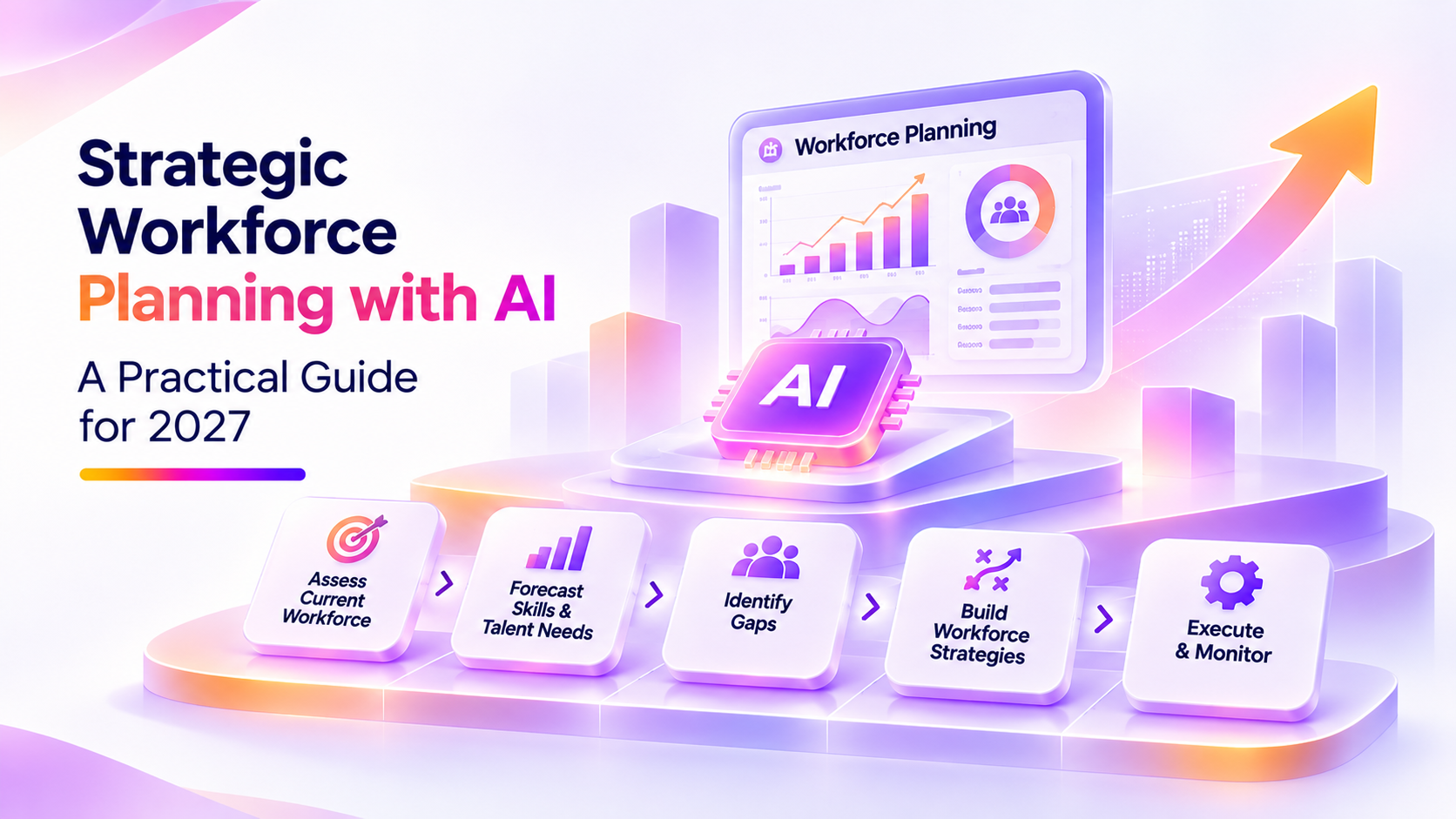
Workforce plans used to be built once a year, mostly as headcount forecasts: how many people, in which roles, at what cost. AI has changed that. Tasks inside every role are shifting, some work is being automated and new skills are needed faster than annual plans can keep up. Leaders now need to plan for skills and work, not only for headcount.
[[toc]]
Few organisations feel ready. In a July 2026 Gartner survey of 297 CHROs, only 19% of organisations had workforce planning practices that effectively help leaders understand how work is changing, account for AI's impact and realign talent strategies with business goals. Yet Gartner found that organisations with effective workforce planning are 1.4 times more likely to exceed revenue goals and 1.5 times more likely to exceed cost goals.
This guide explains what strategic workforce planning is, how AI changes it, a practical step-by-step process, the role of skills data and the mistakes to avoid. It is written for CHROs, HR directors, workforce planners, CLOs and business leaders.
Quick answer: what is strategic workforce planning with AI? Strategic workforce planning is the process of aligning the size, skills and shape of the workforce with business strategy over a three-to-five-year horizon. With AI, it also means analysing how AI will change tasks in each role, modelling scenarios faster, using skills data rather than job titles alone, and deciding where to build, buy, borrow or automate capability, with plans reviewed far more often than once a year.
What is strategic workforce planning?
Strategic workforce planning (SWP) looks beyond next year's hiring plan. It asks what capability the business will need to deliver its strategy in three to five years, what capability it has today and how to close the gap.
It differs from operational workforce planning, which focuses on near-term headcount, budgets and scheduling. Strategic planning focuses on long-term capability, critical roles and skills.
How AI changes workforce planning
- Work changes inside roles, not just between them. AI automates some tasks and augments others. Planning has to look at tasks and skills within each role, not only at the number of roles.
- Skills data replaces job titles as the planning unit. Two people with the same title can have very different skills. Planning by skills shows where capability really sits.
- Scenarios can be modelled faster. AI tools can test different assumptions about growth, automation and attrition and show the effect on skills and cost.
- Plans need to update more often. With technology moving quickly, an annual plan is out of date before the year ends. Quarterly reviews are becoming more common.
- Automation is now a planning option. Alongside build, buy and borrow, leaders now decide which work AI can take on and how human roles will change as a result.
Where AI helps in strategic workforce planning
- Skills inference: building or updating skills profiles from learning records, work history and assessments, with human validation.
- Task analysis: estimating which tasks in a role are likely to be automated, augmented or unchanged.
- Gap forecasting: projecting future skills gaps based on strategy, attrition and expected changes in work.
- Scenario modelling: comparing options, such as reskilling versus hiring, and their effect on cost and timing.
- Internal talent matching: finding people with adjacent skills who could move into growth roles.
- Learning recommendations: linking forecast gaps to personalised learning paths so the plan turns into action.
AI supports the analysis. Decisions about people, roles and change remain with leaders, and should be explained clearly to employees.
How to build a strategic workforce plan with AI: step by step
Step 1: start with business strategy
Work with business leaders to list the strategic priorities for the next three to five years and the capabilities each one depends on.
Step 2: identify critical roles and skills
Decide which roles and skills have the biggest impact on strategy and are hardest to replace. Focus the plan on these first.
Step 3: build a current skills baseline
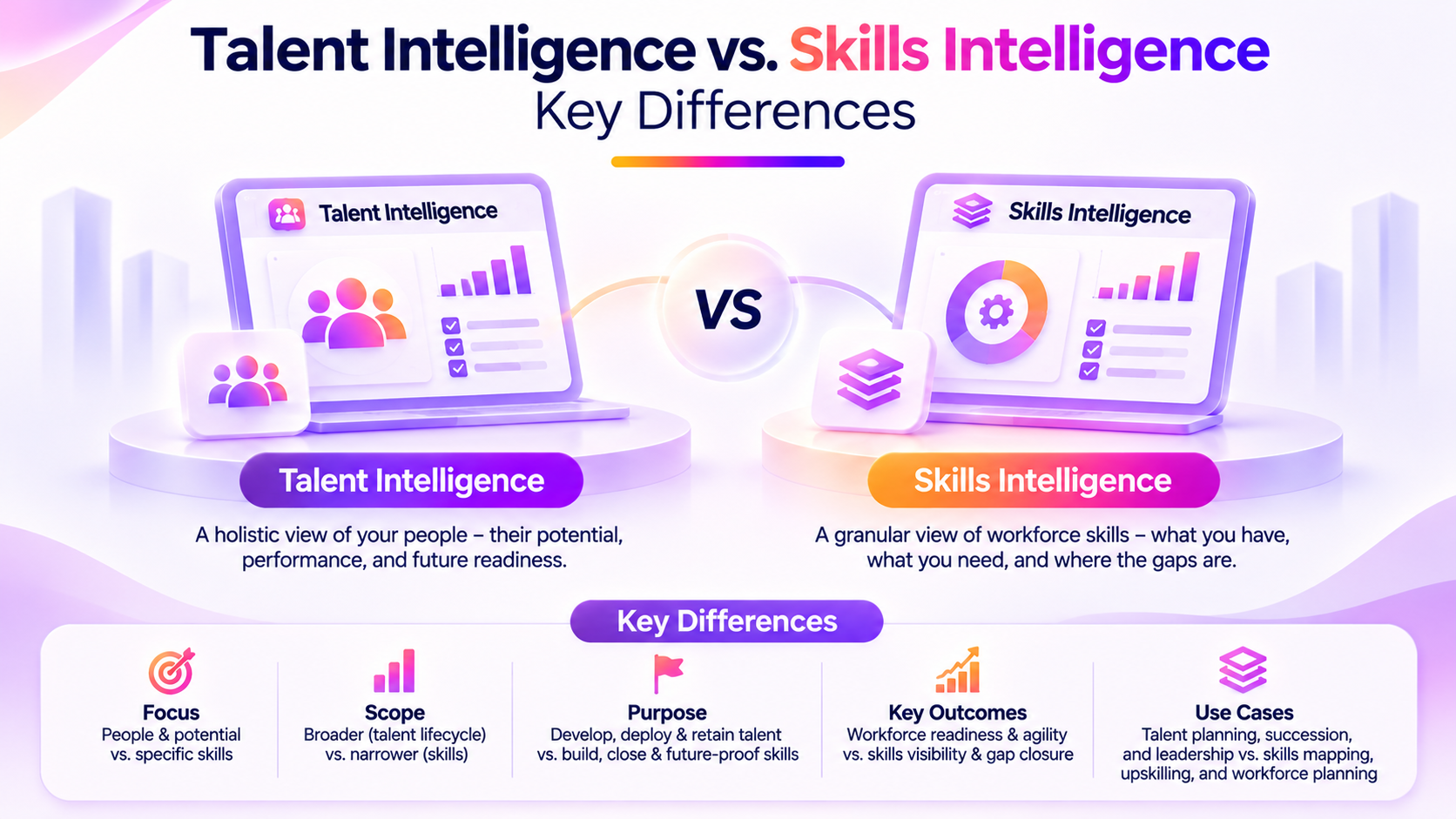
Create a reliable view of the skills your workforce has today, using a skills taxonomy, assessments, manager validation and learning data. This is where skills intelligence matters most.
Step 4: analyse how AI will change the work
For each critical role, break the work into tasks and estimate how AI will affect each one. Identify which skills will grow in importance, which will decline and which new skills will be needed.
Step 5: forecast future demand and supply
Estimate the skills and capacity needed under different scenarios, and compare them with expected supply after attrition, retirements and internal moves.
Step 6: identify the gaps
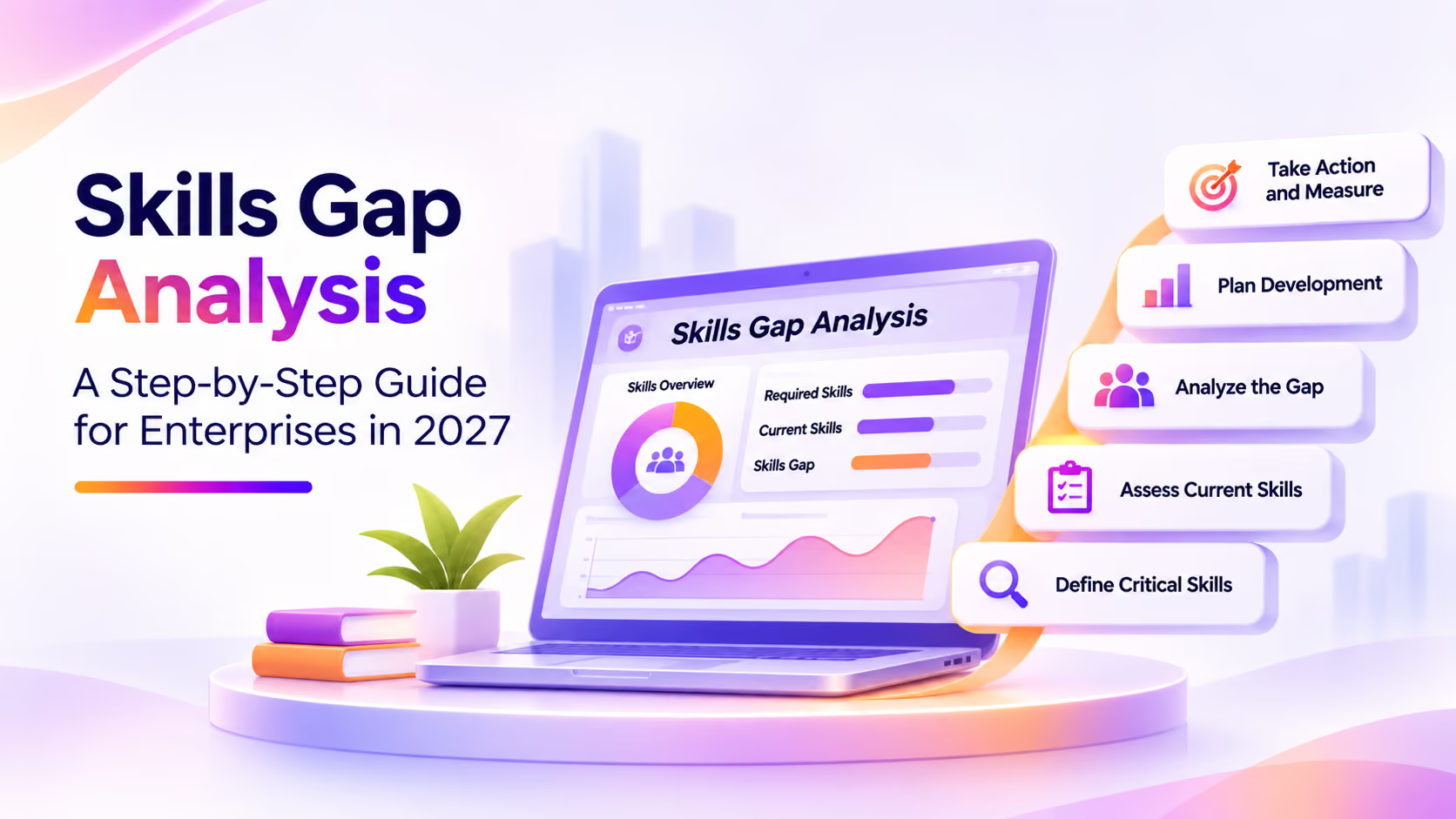
Compare future demand with future supply by skill, role and location. Prioritise the gaps by business impact and urgency. Our guide to skills gap analysis covers this in detail.
Step 7: choose the response for each gap
- Build: upskill or reskill existing employees.
- Buy: hire externally.
- Borrow: use contractors, partners or internal projects.
- Automate: redesign work so AI handles certain tasks.
For many gaps, building from within is faster and keeps knowledge in the business. Our guide to upskilling vs reskilling vs cross-skilling explains which approach fits each need.
Step 8: turn the plan into action
Launch targeted learning paths, internal mobility programmes and hiring plans. Assign owners and timelines for each action.
Step 9: monitor and update regularly
Track progress on priority gaps every quarter and update the plan when strategy, technology or the labour market changes.
The role of skills data and learning
A workforce plan is only as good as the skills data behind it. Plans built on job titles alone miss the adjacent skills that make internal moves possible and hide gaps inside teams.
Learning is where most plans succeed or fail. A plan that identifies reskilling needs but has no way to deliver and track targeted learning stays on paper. Connecting the workforce plan to personalised learning paths, and measuring proficiency over time, is what turns the plan into capability. This is also central to workforce development.
Metrics for AI-era workforce planning
- Critical skills coverage: the share of critical skills where the organisation has enough people at the required level.
- Gap closure rate: how quickly priority gaps are closing.
- Internal fill rate: the share of critical roles filled by internal candidates.
- Time to proficiency: how long reskilled employees take to reach the required level.
- Workforce cost against plan: actual cost compared with the planned mix of build, buy, borrow and automate.
- Business outcomes: progress on the strategic goals the plan was built to support.
Common mistakes to avoid
- Planning headcount, not skills. Headcount alone hides where capability really sits.
- Treating AI as only a cost-cutting tool. Removing roles without redesigning work can create gaps later.
- Weak skills data. Forecasts built on incomplete skills profiles lead to the wrong decisions.
- A plan with no learning engine. Reskilling targets mean little without a way to deliver and measure learning.
- Planning once a year. Review critical gaps at least quarterly.
- Leaving employees out. Explain how work is changing and how people can grow. Trust affects both adoption and retention.
How Invince supports AI-era workforce planning
Invince does not replace your workforce planning tools. It provides the skills data and learning that make plans work:
- Invince LXP provides a configurable skills taxonomy, skills passports, continuous skill gap analysis and organisation-wide skill gap and readiness reporting, plus personalised learning journeys to close gaps.
- Invince LMS (formerly UpsideLMS) is an AI-powered enterprise learning platform for onboarding, compliance, upskilling and workforce development, with competency management and individual development plans.
- Aura provides enterprise AI agents that automate learning, HR and workforce workflows while delivering personalised experiences and actionable insights.
- Catalyst helps employees build and practise conversation-based skills through AI roleplay with structured performance feedback.
- Craft and Plethora provide the learning content, from custom multilingual courses in more than 150 languages to a library of more than 80,000 ready-to-use resources.
Frequently asked questions
What is strategic workforce planning?
Strategic workforce planning aligns the size, skills and shape of the workforce with business strategy over a three-to-five-year horizon, and plans how to close the gap between the capability needed and the capability available.
How is AI used in workforce planning?
AI helps infer and update skills profiles, analyse how tasks will change, forecast skills gaps, model scenarios, match people to growth roles and recommend learning. Leaders still make and explain the decisions.
What is the difference between strategic and operational workforce planning?
Operational planning covers near-term headcount, budgets and scheduling. Strategic planning looks three to five years ahead at critical roles and skills.
What is build, buy, borrow and automate?
These are the main responses to a capability gap: build by developing existing employees, buy by hiring, borrow through contractors, partners or internal projects, and automate by redesigning work so AI handles certain tasks.
How often should a strategic workforce plan be updated?
Set the long-term plan annually, but review critical skills gaps and assumptions at least quarterly, because technology and markets change quickly.
Why is skills data important for workforce planning?
Skills data shows where capability really sits, reveals adjacent skills that enable internal moves and makes forecasts of future gaps far more accurate than job titles alone.
Conclusion: plan for skills, not just headcount
AI is changing work faster than traditional workforce plans can follow. Strategic workforce planning in 2027 needs a reliable skills baseline, a clear view of how AI will change tasks, regular scenario reviews and a learning engine that turns plans into capability.
Start with one critical role family. Build its skills baseline, analyse how AI will change the work, identify the gaps and launch targeted learning. Then review quarterly and extend the approach.
Which role in your organisation will AI change most by 2027? Share it in the comments, or pass this guide to the person leading your workforce strategy.
Ready to connect workforce planning to skills and learning? Explore Invince LXP or book a demo.
Ready to Revolutionize Learning at Your Organization?
Join 400+ enterprises using Invince to upskill, reskill, and retain top talent.
Ready to Revolutionize Learning at Your Organization?
Join 400+ enterprises using Invince to upskill, reskill, and retain top talent.

Ready to Revolutionize Learning at Your Organization?
Join 400+ enterprises using Invince to upskill, reskill, and retain top talent.