


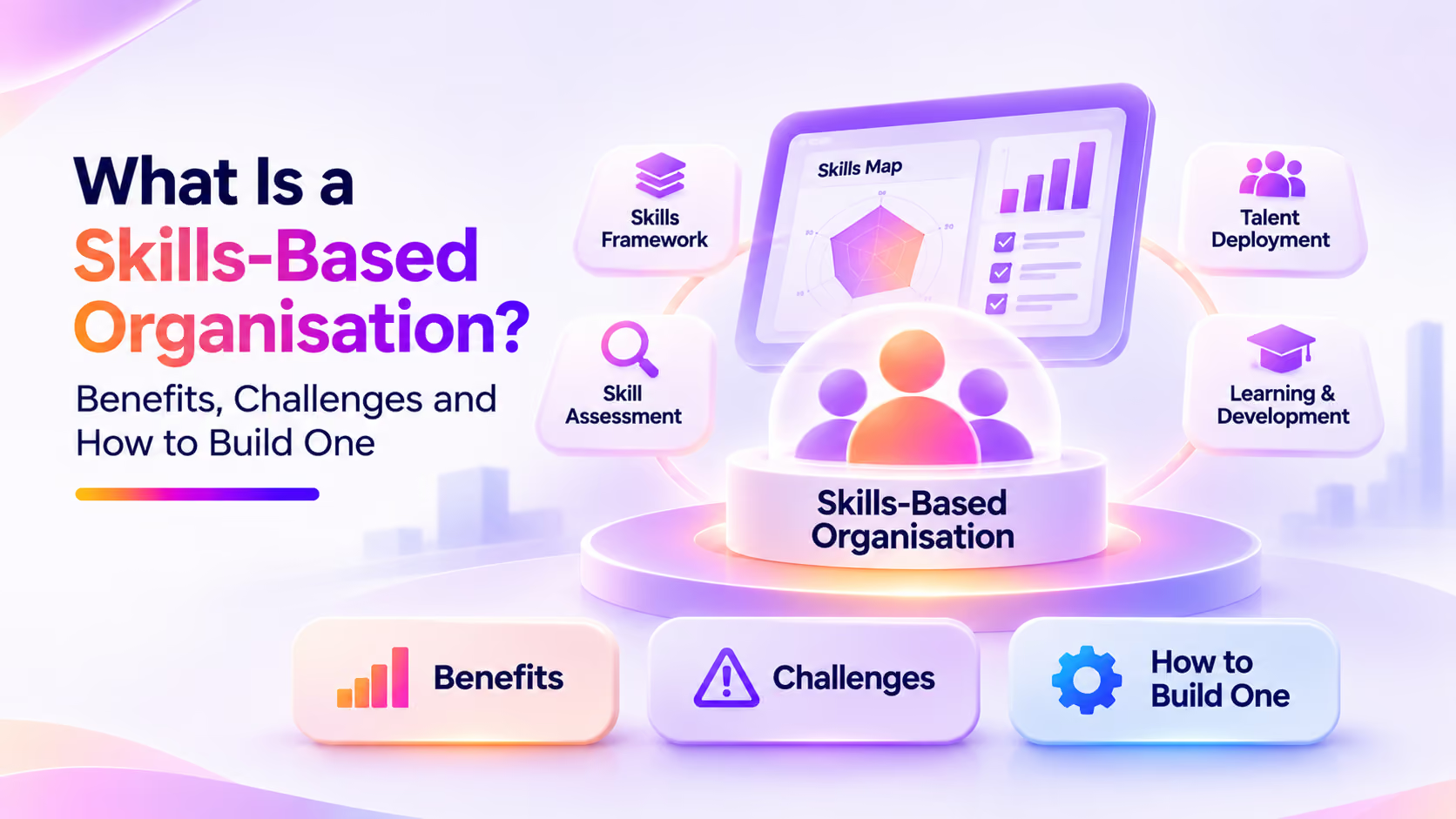
What Is a Skills-Based Organisation? Benefits, Challenges and How to Build One
For most of the last century, the job has been the basic unit of work. People were hired into jobs, paid by job grade, trained for their job and promoted to the next job. That model is under strain. Roles now change faster than job descriptions can be rewritten, and much of the work people do no longer fits inside a single title.
[[toc]]
A growing number of organisations are responding by putting skills, rather than jobs, at the centre of how they hire, deploy, develop and reward people. In Deloitte's skills-based organisation research, 71% of workers said they already perform some work outside the scope of their job descriptions, yet fewer than one in five organisations were adopting skills-based approaches to a significant extent. The gap between how work happens and how it is managed is widening.
This guide explains what a skills-based organisation is, how it differs from a job-based model, the benefits and challenges, and a practical, step-by-step way to start. It is written for CHROs, CLOs, HR directors and L&D leaders planning their 2027 workforce strategy.
Quick answer: what is a skills-based organisation? A skills-based organisation is one that uses skills, rather than job titles, degrees or tenure, as the main basis for talent decisions. It hires, deploys, develops, promotes and plans its workforce according to the skills people have and the skills the work needs. Jobs still exist, but they are described as sets of skills, and people can move between roles, projects and teams as their skills grow.
What is a skills-based organisation?
In a skills-based organisation, skills become the shared language for every people decision. Instead of asking “who has done this job before?”, managers ask “who has the skills this work needs, and who is close to having them?”
In practice, a skills-based organisation typically:
- describes roles in terms of the skills and proficiency levels they require
- keeps an up-to-date view of the skills each employee has, with evidence
- hires on demonstrated skills as well as qualifications and experience
- fills projects, gigs and open roles from inside the organisation where skills match
- plans learning around the skills the business needs next
- links career paths, promotion and, over time, reward to skills growth
Becoming skills-based is not an all-or-nothing switch. Most organisations start with a few critical roles or a single talent practice, such as internal mobility or learning, and expand from there.
Skills-based vs job-based organisation: what is the difference?
- Unit of work: a job-based organisation defines work by fixed job descriptions. A skills-based organisation breaks work into the skills it needs and matches people to it.
- Hiring: a job-based model relies on titles, degrees and years of experience. A skills-based model looks at demonstrated skills and potential, alongside those signals.
- Deployment: in a job-based model, people mostly stay within their role. In a skills-based model, people can contribute to projects and teams outside their role when their skills fit.
- Development: a job-based model trains people for the job they have. A skills-based model builds the skills the business will need and the skills each person wants for their next move.
- Career paths: a job-based model offers a ladder of titles. A skills-based model offers many routes, including sideways moves, based on adjacent skills.
- Workforce data: a job-based model reports headcount by job. A skills-based model can show which skills the organisation has, where they sit and where the gaps are.
Why organisations are moving to a skills-based model in 2027
Skills are changing faster than jobs
In the World Economic Forum's Future of Jobs Report 2025, employers expect 39% of workers' core skills to change by 2030, and 63% see skills gaps as a major barrier to business transformation, more than any other barrier. When skills shift this quickly, job descriptions become out of date before the next review cycle.
AI is reshaping tasks inside every role
AI tools are taking over some tasks and creating demand for new ones, often within the same job title. Tracking skills, rather than titles, shows leaders where AI is changing work and which people are ready to take on new tasks.
Talent is hard to find externally
Looking beyond titles and degrees widens the pool of people who can do the work. LinkedIn's March 2025 research note found that a skills-based hiring approach could expand talent pools by 6.1 times globally. The same logic applies inside the organisation: people with the right skills are often already on the payroll, in a different team.
Employees expect visible growth
People want to see how their skills can lead to new opportunities. A skills-based approach makes those routes visible, which supports engagement and retention.
Benefits of becoming a skills-based organisation
- Faster, better talent decisions. Managers can find people with the right skills for a project or role in days rather than weeks.
- Stronger internal mobility. More roles can be filled from within, which reduces hiring cost and keeps knowledge in the business.
- More focused learning spend. Learning is aimed at the skills the business needs, not at whichever course is popular.
- Wider, fairer talent pools. Judging people on skills, as well as background, opens opportunities to capable people who might otherwise be overlooked.
- Better workforce planning. Leaders can see skill strengths and gaps across teams and plan to build, buy or redeploy.
- Greater agility. When priorities change, the organisation can move skills to the work rather than restructuring around jobs.
Challenges of becoming a skills-based organisation
- No shared skills language. Without an agreed skills framework, teams describe the same skill in different ways. Deloitte's research found that only 10% of HR executives said they effectively classify skills into a taxonomy or framework.
- Incomplete or out-of-date skills data. Self-reported skills on a profile are a start, but they need validation from assessments, managers and work evidence.
- Legacy processes and mindsets. Hiring, grading and reward systems are often built around jobs and take time to change.
- Manager habits. Managers may be reluctant to release strong people to other projects. Clear rules and recognition help.
- Disconnected systems. When HR, learning and project data sit in separate tools, building a single view of skills is hard.
The building blocks of a skills-based organisation
- A skills taxonomy. A structured list of skills, definitions and proficiency levels linked to roles. Start with a ready-made framework and adapt it to your business.
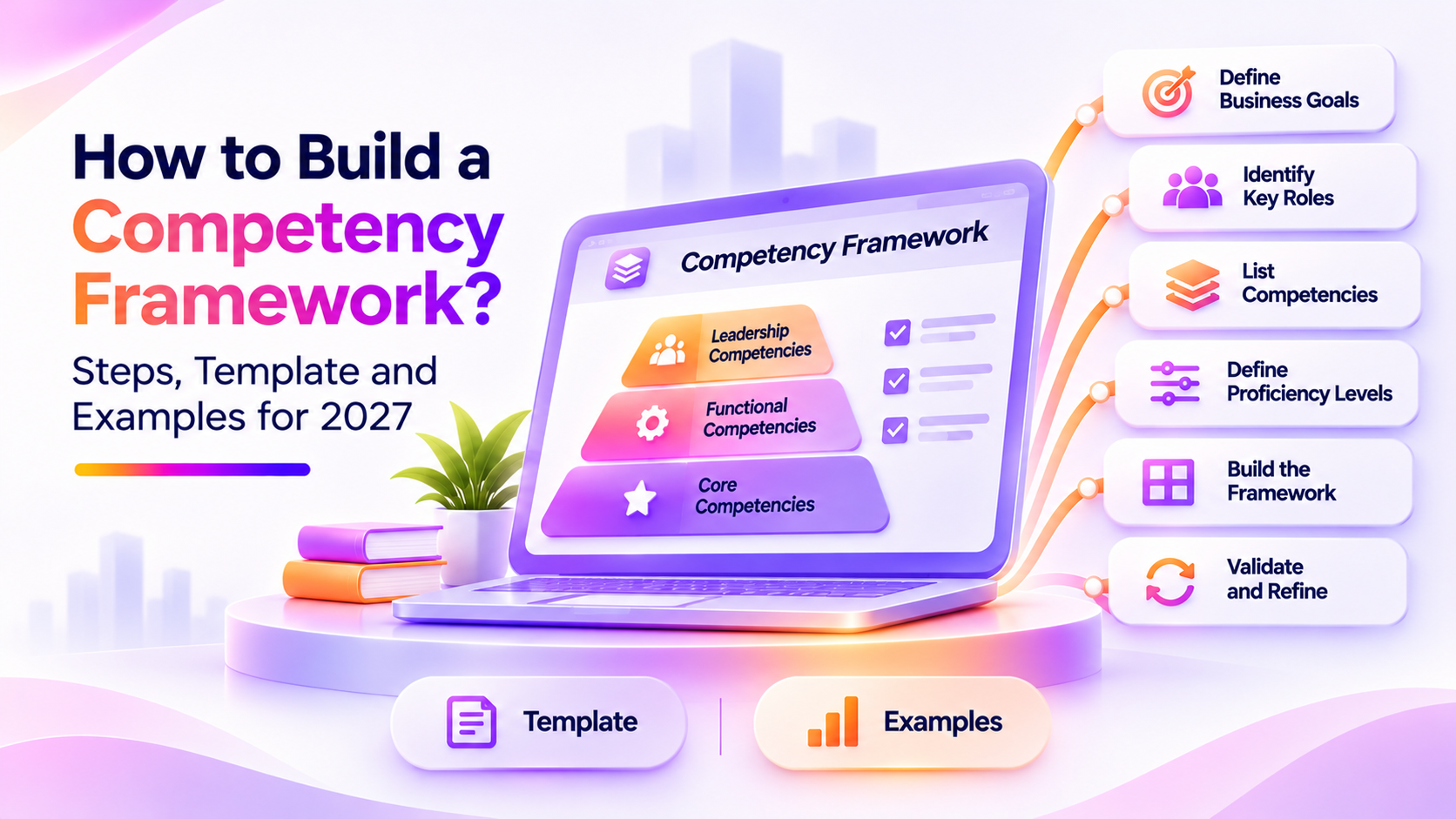
- Role skill profiles. For each critical role, the skills required and the level expected. A clear competency mapping process gives managers and employees the same reference point.
- Trusted skills data. A record of each person's skills and proficiency, built from assessments, manager validation, learning records and work evidence.
- Skills-based talent practices. Hiring, internal mobility, learning, performance and succession processes that use skills as a common input.
- Skills-based learning. Personalised learning paths that close the gaps between a person's current skills and their role or career goals.
- Governance and measurement. Clear ownership of the skills framework, regular updates and metrics that show whether gaps are closing.
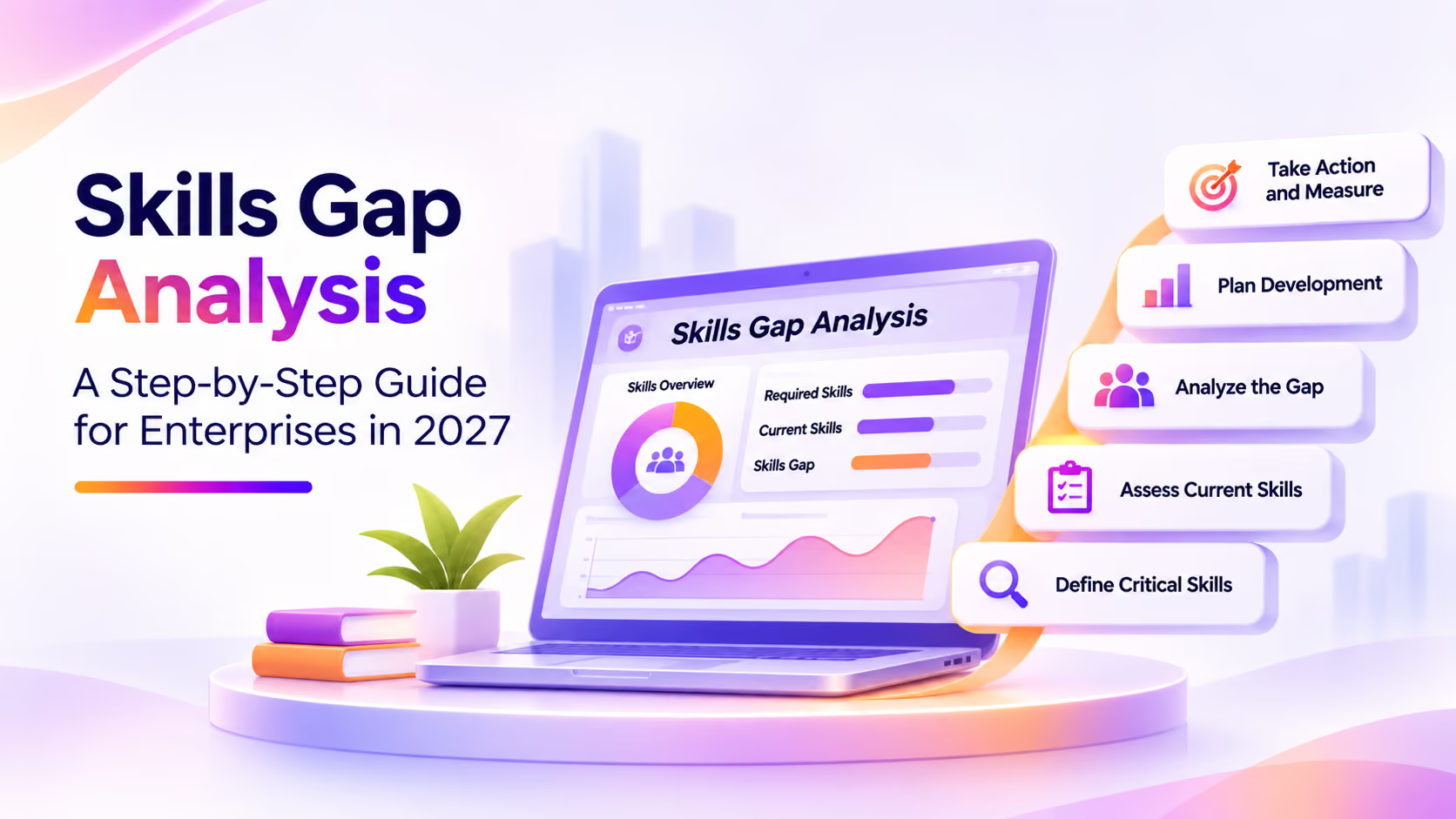
How to become a skills-based organisation: a step-by-step plan
- Start with the business case. Choose one or two problems skills can help solve, such as slow internal hiring, a capability gap in a growth area or low learning impact.
- Pick a pilot area. Select a function or group of critical roles where skills are changing fast and leadership support is strong.
- Agree the skills framework. Define the skills and proficiency levels for the pilot roles, using an existing taxonomy where possible.
- Build a baseline of skills data. Combine self-assessment, manager input and assessments to see current skills and gaps.
- Apply skills to one or two talent practices. For example, use skills to recommend learning paths and to fill internal projects.
- Connect your systems. Link HR data, your learning platforms and assessments so skills data stays current.
- Measure and expand. Track skill gaps closed, internal moves and time to fill roles, then extend the approach to more roles and practices.
Once gaps are visible, the next decision is how to close them. Our guide to upskilling vs reskilling vs cross-skilling explains which approach fits each need.
The role of skills intelligence
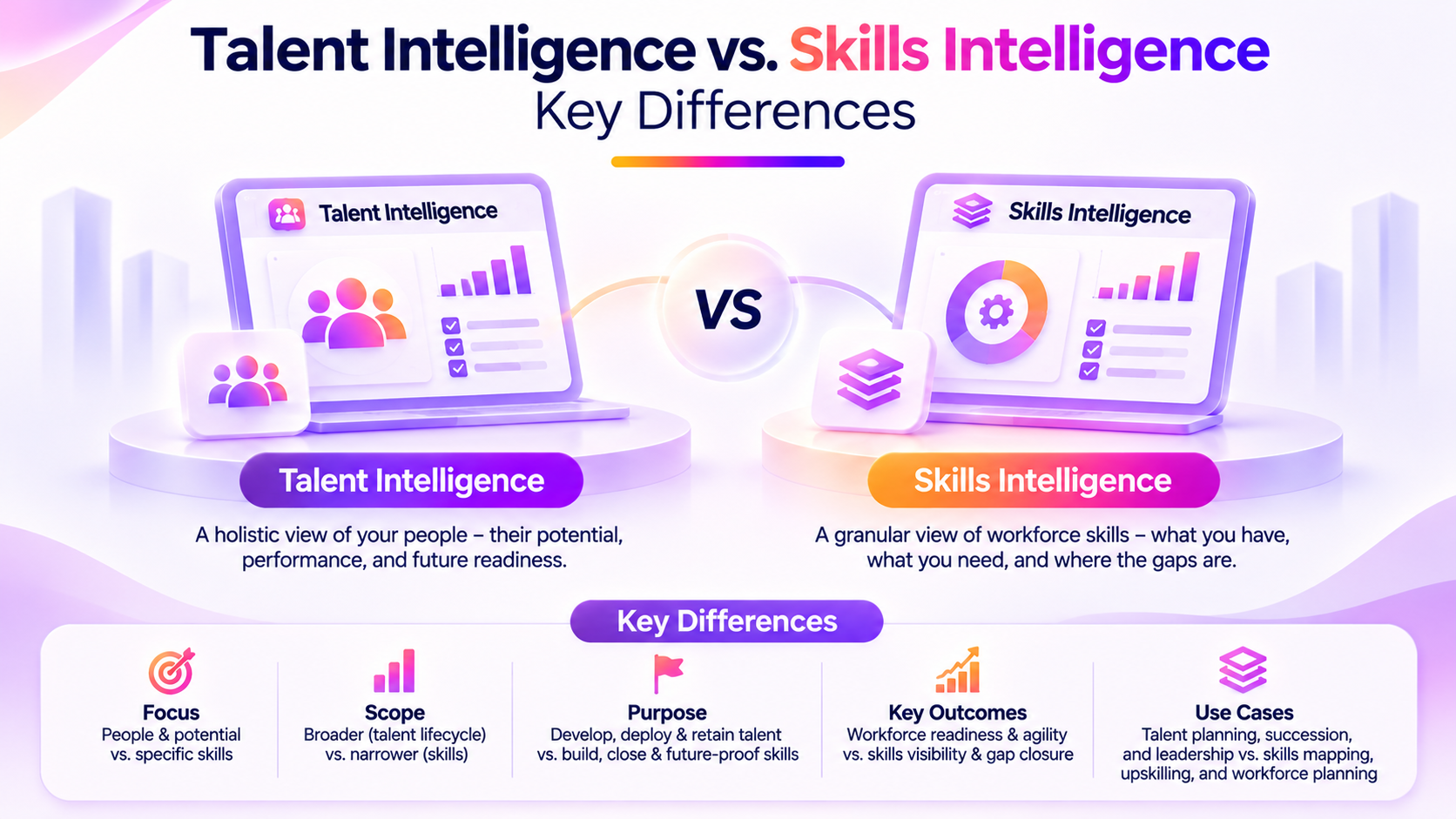
A skills-based organisation depends on accurate, current skills data. Skills intelligence is what turns scattered skills information into a usable view: which skills people have, which skills the business needs and where the gaps are. AI makes this practical at scale by mapping content and roles to skills, analysing gaps and recommending learning for each person.
Without skills intelligence, a skills-based model stays a policy on paper. With it, managers and HR can make day-to-day decisions on skills with confidence.
How Invince helps you build a skills-based organisation
The Invince AI-powered corporate learning ecosystem supports the main building blocks:
- Invince LXP is an AI-driven learning experience platform that delivers personalised, role-based and skills-focused learning journeys. It includes a pre-built skills taxonomy that administrators can configure and extend, a skills passport for each learner, and skill gap and readiness reporting for L&D and HR leaders.
- Invince LMS (formerly UpsideLMS) is an AI-powered enterprise learning platform for onboarding, compliance, upskilling and workforce development, with competency management and individual development plans.
- Craft is a GenAI-powered multilingual course builder with support for more than 150 languages, so L&D teams can create skills content quickly, with subject experts reviewing every output.
- Plethora is a curated library of more than 80,000 ready-to-use learning resources designed to accelerate enterprise-wide skill development.
- Aura provides enterprise AI agents that automate learning, HR and workforce workflows while delivering personalised experiences and actionable insights.
- Catalyst is an AI-powered roleplay platform that helps employees practise real-world conversations and build skills through lifelike AI simulations and structured performance feedback.
Frequently asked questions about skills-based organisations
What is a skills-based organisation?
A skills-based organisation uses skills, rather than job titles, degrees or tenure, as the main basis for hiring, deploying, developing and promoting people.
What is the difference between a skills-based and a job-based organisation?
A job-based organisation manages people through fixed job descriptions and titles. A skills-based organisation breaks work into skills and matches people to work based on the skills they have and can build.
What are the benefits of a skills-based organisation?
The main benefits are faster talent decisions, stronger internal mobility, more focused learning spend, wider and fairer talent pools, better workforce planning and greater agility.
How do you start becoming a skills-based organisation?
Start small: choose a business problem and a pilot group of roles, agree a skills framework, build a baseline of skills data, apply it to one or two talent practices and measure the results before expanding.
What is a skills taxonomy?
A skills taxonomy is a structured list of skills, their definitions and proficiency levels, linked to roles. It gives the whole organisation a shared language for skills.
How does skills intelligence support a skills-based organisation?
Skills intelligence provides the accurate, current skills data a skills-based organisation needs. It shows which skills people have, which skills the business needs and where the gaps are, so decisions can be based on evidence.
Conclusion: put skills at the centre of work
The job is not disappearing, but it is no longer enough on its own to manage a workforce whose work and skills are changing every year. A skills-based organisation uses skills as the common language for hiring, deployment, learning and growth, so people and work can be matched more quickly and fairly.
You do not need to transform everything at once. Pick one business problem, one group of roles and one talent practice. Build a shared skills framework, get trusted skills data and measure the change. Then expand.
Which talent decision in your organisation would benefit most from skills data? Share it in the comments, or pass this guide to the person leading your 2027 workforce strategy.
Ready to build a skills-based organisation? Explore Invince LXP or book a demo to see skills-first learning in action.
Ready to Revolutionize Learning at Your Organization?
Join 400+ enterprises using Invince to upskill, reskill, and retain top talent.
Ready to Revolutionize Learning at Your Organization?
Join 400+ enterprises using Invince to upskill, reskill, and retain top talent.

Ready to Revolutionize Learning at Your Organization?
Join 400+ enterprises using Invince to upskill, reskill, and retain top talent.